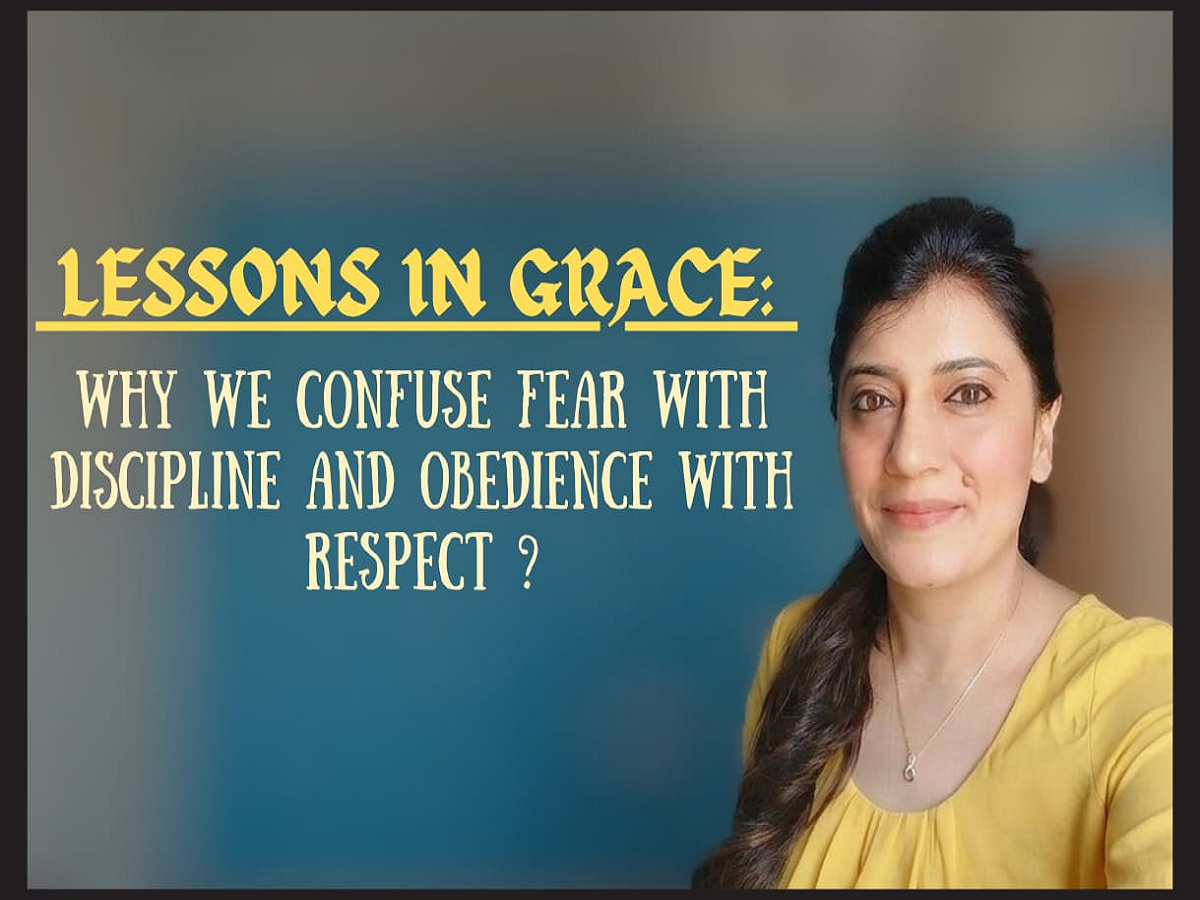
BY KARISHMA
“Children are like wet cement, whatever falls on them makes an impression.”- Hamin Ginott
We live in a society obsessed with outcomes. We want the top grades, the quietest rooms, the complaint nods, and the swift apologies. From the moment a child enters the world, we set up an invisible machinery of correction designed to mold them into shape. But somewhere along the way, in the exhausting crossfire of daily survival, professional stress, and generational habits, we crossed a dangerous invisible line. We stopped teaching our children how to navigate life, and instead taught them how to survive us.
Looking across the profound insights captured in these visual narratives from the illusion of discipline masked as terror, to the heavy, unacknowledged burden of parents who never say “I am sorry”, a deeply unsettling truth emerges: We have built our parenting on the currency of fear, mistaking compliance for character.
The Illusion of Discipline: When Fear Wears a Uniform
Look closely at the everyday scenes we have learned to normalize. A child hunches over a desk, terrified and overwhelmed, while adults point fingers and raise their voices. We call this “discipline”. We tell ourselves that this harshness builds strength.
Yet, true authority was never something you could extract at the gunpoint whether it's literal or emotional. As Jean Jacques Rousseau wisely noted, the only habit a child should learn is to contract no habits of blind submission. When a kid obeys simply because their stomach is tied in knots over what happens if they don't, they aren't learning self-control but they are just learning the hostage management.
Fear gets you compliance right this second. But respect? Respect takes a lifetime. Fear might build a temporary wall, but it hollows out the person standing behind it.
The Collateral Damage of Our Unloaded Rage
One of the most heartbreaking things we do is pass our invisible burdens onto small shoulders by giving them the anger that wasn't theirs to carry.
A brutal day at work, financial panic, a bitter fight with the partner, these are adult poisons. Yet too often, they get dumped straight into the smallest, most defenseless cup in the house. The kid standing closest gets the shouting.
Let’s dive deeper, when n how we cause this damage:
- When we bring up old mistakes, reminding them of a broken glass or a failure from last month. We stop teaching them that messing up is part of growing up. Instead, we hand them a permanent criminal record in the one place they should feel safe.
- When we offer conditional warmth extra hugs on the days they bring home good grades, and icy coldness on the days they slip up. We teach a devastating lesson: You are only worth loving when you perform. They stop learning integrity and start learning how to wear masks.
As the philosopher Seneca once warned, the wounds left by a heavy hand shape the entire posture of a human soul. When kids feel they aren't enough because they are constantly compared with a cousin, a neighbor, or a sibling, their inner world fractures. They stop trying to grow and just start trying to be acceptable.
The Heavy Silence of the Home with no Apologies
Perhaps the heaviest weight of all is our own double standard. We spend years teaching our kids to say sorry, while spending their entire childhood never once saying it to them.
Why it is so painfully hard for a parent to utter three simple words: “I got that wrong. I am sorry”.
Somewhere along the line, we picked up this fragile, outdated ego that believes apologizing to a child makes us look weak. It's a lie. An apology doesn't strip away your authority, it builds deep moral trust. It teaches a child something revolutionary: A person can be wrong and still be entirely worth respecting.
And when we brush off a child's heartbreak with” that's nothing, wait till you have real problems”, we invalidate their entire universe. At ten years old, losing a school project or feeling left out is a real problem. When we gave it away, we teach them that their pain doesn't matter and by extension, that they don't matter either.
Let’s head towards a Real Connection
A child doesn't need a perfect parent. Perfection is cold, distant, and intimidating. A child just needs a real human being, someone who messes up, looks them in the eye, and has the courage to rebuild the bridge after the storm.
True discipline isn't about making a child smaller so we can feel bigger. It’s about holding a safe space for them to grow tall without being afraid. When we drop our empty threats, stop comparing them, actually keep the promises, and swallow the pride to say sorry, we finally break the cycle.
We stop raising kids who are terrified of us, and start raising human beings who are proud to walk beside us.
Connect n Enquire with the author
AUTHOR: KARISHMA