NEWS
India-EU FTA approved; what will be the next step for the 'Mother of All Deals' to come into effect?
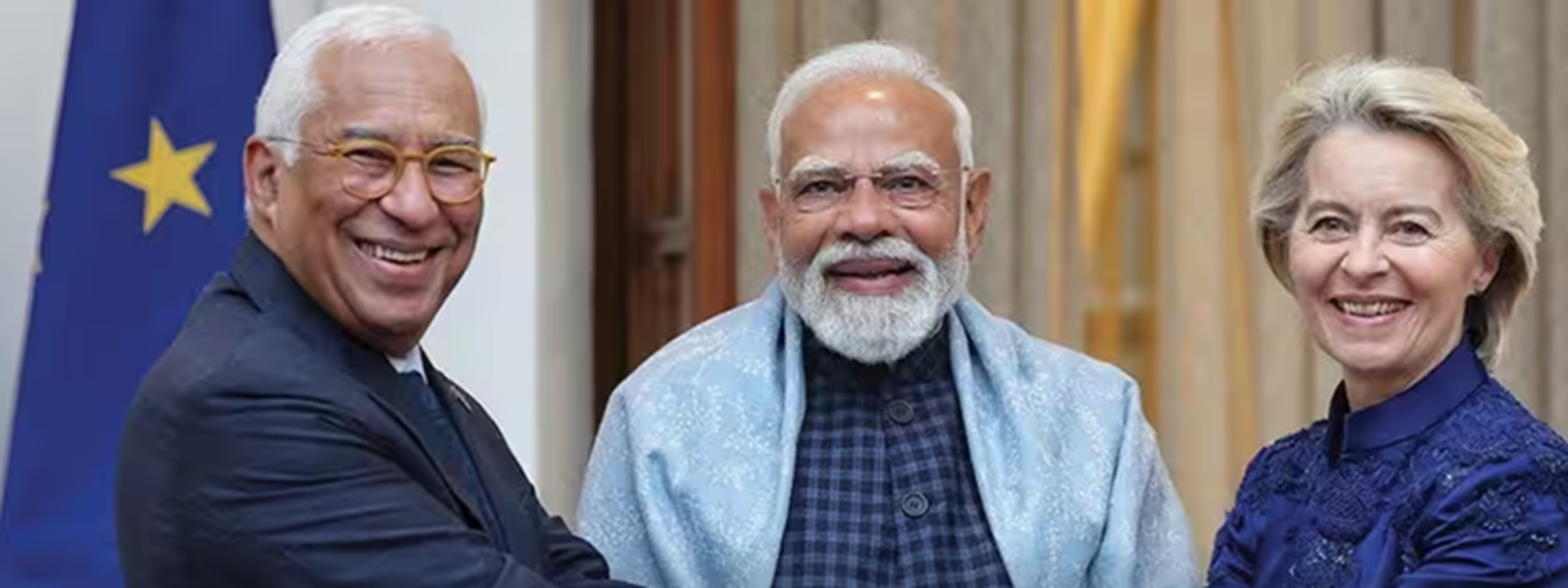
Trade between India and the EU is worth €180 billion, and over 800,000 Indians work there. He said new dimensions of cooperation will be established in every area, from strategic technology to clean energy.
India-EU FTA approved; what will be the next step for the 'Mother of All Deals' to come into effect?
India EU Free Trade Agreement: This historic Free Trade Agreement (FTA) between India and the European Union (EU) is considered crucial not only for bilateral trade but also for the global geo-economic landscape. The agreement, reached after nearly 18–20 years of complex and often stalled negotiations, signals that both sides view each other as strategic partners in the changing global landscape. At a time when trade relations with the US face challenges such as uncertainty and high tariffs, the India-EU FTA will ensure an alternative, stable, and reliable market for both.
Currently, the European Union is India's largest trading partner, accounting for approximately 17 percent of India's total trade with the EU. In the fiscal year 2024-25, trade in goods between the two countries totaled approximately $136.53 billion, with India's exports amounting to $75.85 billion and imports to $60.68 billion, resulting in a trade surplus of approximately $15.17 billion. Furthermore, the services sector, including IT, business services, and telecommunications, also accounted for approximately $83 billion. These figures are expected to increase sharply after the implementation of the FTA.
FTA expected to boost trade
This agreement will prove to be crucial on the tariff front. According to news agency PTI, import duties on approximately 93 percent of Indian goods, excluding automobiles and steel, will be completely eliminated in the European market. The remaining products will also see either significant tariff reductions or quota-based exemptions. Overall, the EU will provide tariff concessions on approximately 99.5 percent of Indian goods. India will also gradually reduce its import duties, making European products relatively cheaper in the Indian market. This will significantly benefit sectors such as textiles, leather, engineering goods, pharmaceuticals, agricultural products, and processed foods.
The impact of this FTA will go beyond trade. Prime Minister Narendra Modi clarified that it is not just a trade agreement, but also a new framework for mobility, technology, and people-to-people contact. It will facilitate the movement of students, researchers, skilled professionals, and workers, opening up new opportunities for education, research, and employment. It will also strengthen cooperation in areas such as clean energy, green hydrogen, semiconductors, digital technology, and supply chain resilience.
Defense and security cooperation is also a key part of this agreement. According to PM Modi, this FTA will formalize and deepen partnerships in areas such as counter-terrorism, cybersecurity, and defense co-production. This will not only enhance strategic trust but also allow the Indian defense industry to benefit from European technology and investment.
How will FTA be effective?
- However, it will take time for the FTA to come into effect immediately. The European Union must first publish the draft negotiations as a formal text.
- It will have to be legally tested and translated into all official languages.
- After this, approval of the European Council and the European Parliament will be necessary.
- This agreement will come into force only after completion of all these processes and formal approval by India.
It is expected to come into effect next year. Overall, the India-EU FTA represents a major opportunity for India to increase exports, investment, employment, and its share in global value chains, while for the EU, it opens access to a large, young, and rapidly growing economy in Asia. This agreement is expected to propel the two sides to new heights of long-term economic partnership.