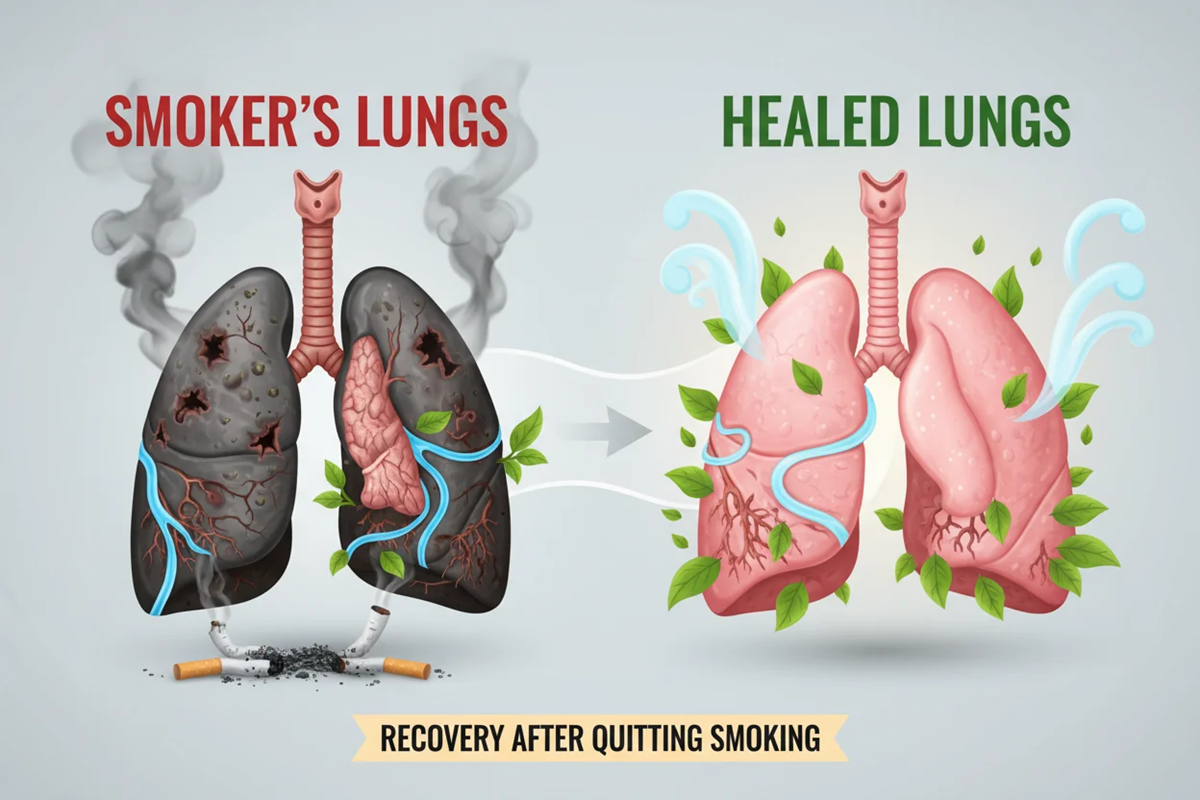
After quitting smoking, the body gradually begins to heal. Learn about the changes that occur in the body from a few hours to 10-15 years after quitting smoking and how they occur.
Quitting Smoking
Smoking cigarettes causes numerous harms to the body and increases the risk of lung cancer. The good news is that after quitting smoking, the body begins to heal. Its benefits become visible within a few days, while it takes several years for the risk of cancer to decrease. According to one study, the additional risk of lung cancer is reduced by approximately half after 10 to 15 years of quitting smoking. The sooner one quits, the greater the health benefits.
What changes occur after quitting smoking?
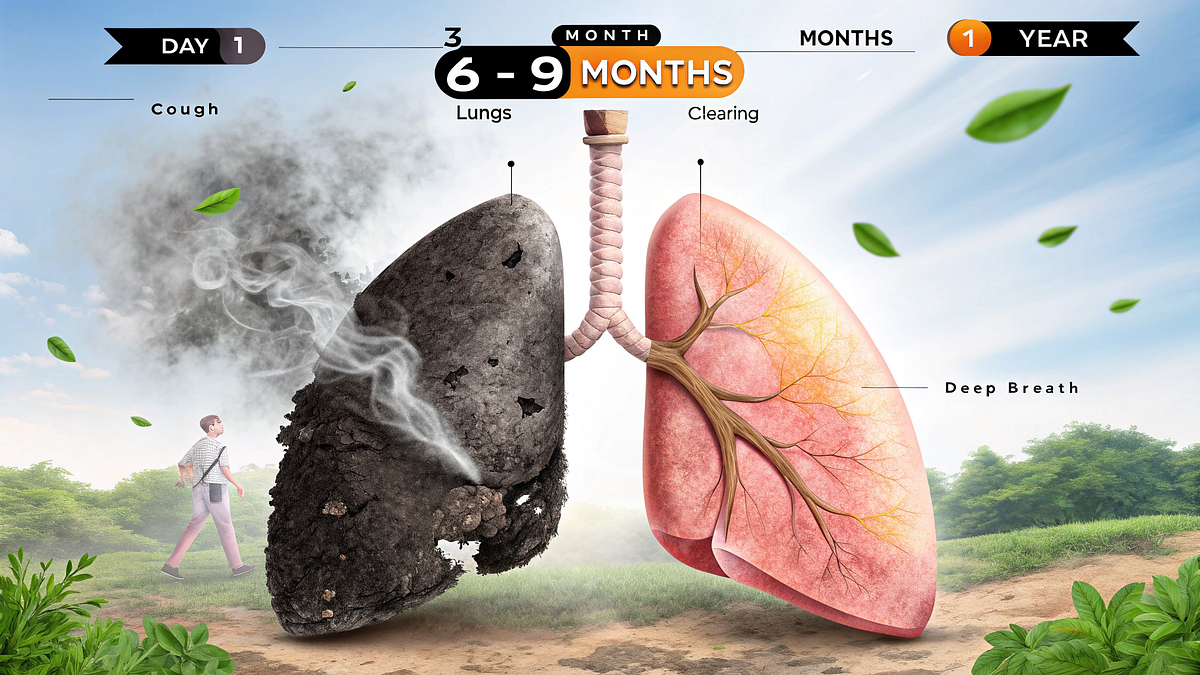
The body begins to change as soon as you quit smoking. Within a few days, blood nicotine levels reach zero, and carbon monoxide levels return to normal. Within one to 12 months, problems like coughing and shortness of breath begin to subside. Within one to two years, the risk of heart attack is significantly reduced. Meanwhile, within five to ten years, the additional risk of cancer of the mouth, throat, and voice box is reduced by nearly half.
The risk of lung cancer is halved in 10 to 15 years.
In the case of lung cancer, the risk continues to decrease over time. According to research, after 10 to 15 years of quitting smoking, the additional risk of lung cancer is reduced by about half compared to those who continue to smoke. Furthermore, the American Cancer Society states that after 10 to 15 years, the risk of lung cancer is reduced by about 50 percent compared to those who continue to smoke. This does not mean that the risk is completely eliminated after 15 years. In long-term smokers, the risk may persist and may continue to decrease over time.
The sooner you quit, the more benefits you get.
There is no set age for quitting smoking. Quitting provides health benefits regardless of how long a person has smoked or their age. Quitting smoking helps repair some of the damage to the lungs and reduces the risk of lung cancer. However, lung cancer risk is not determined solely by smoking. Secondhand smoke, air pollution, radon, and certain workplace hazards can also increase the risk. Therefore, quitting smoking is an important step for lung health.