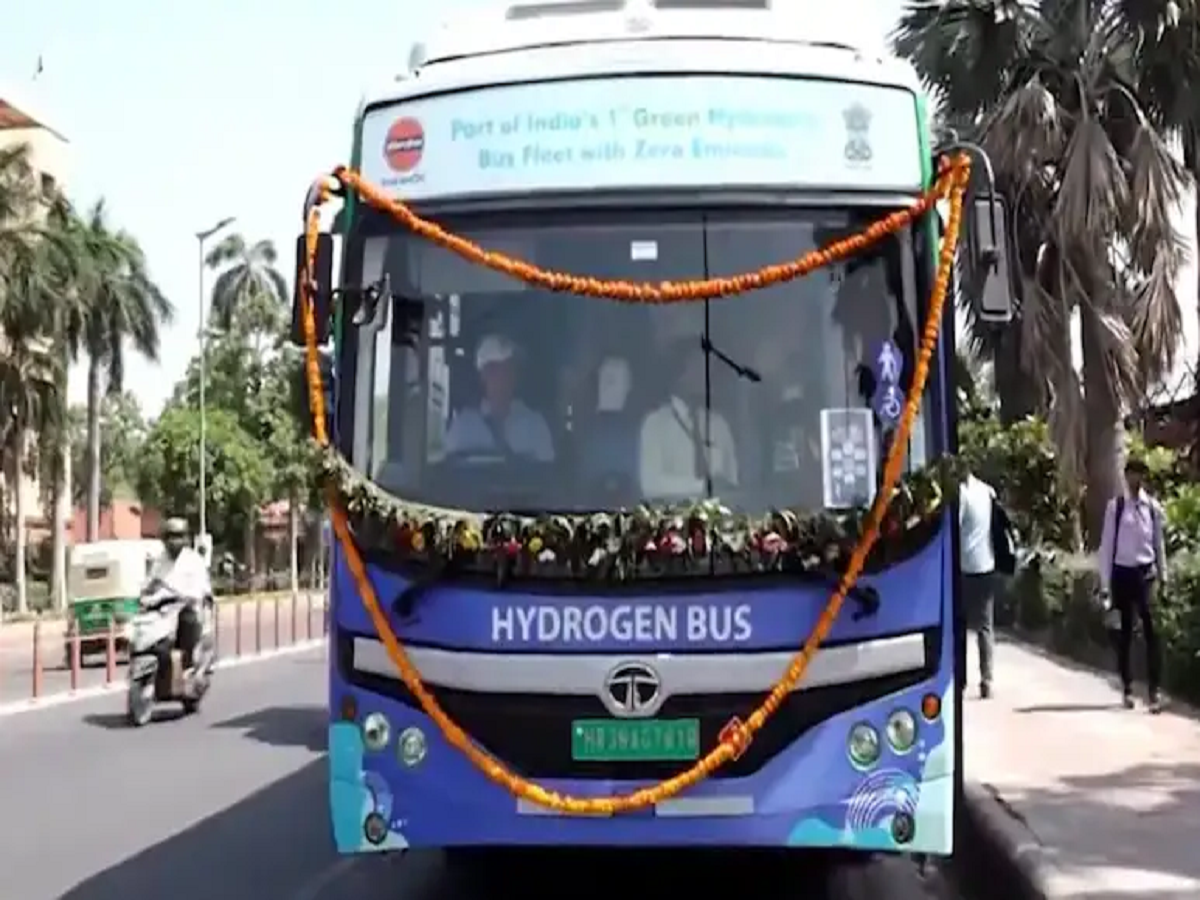
Hydrogen Fuel Cell Technology is rapidly emerging as one of the most promising solutions for cleaner public transportation in India. As the country focuses more on reducing pollution and promoting green energy, hydrogen-powered buses are being seen as a future alternative to traditional diesel and CNG buses.
Unlike conventional fuel-powered vehicles, hydrogen buses produce almost zero harmful emissions. Instead of smoke or toxic gases, these buses release only water vapor, making them one of the cleanest transport technologies currently available.
Experts believe hydrogen buses could significantly transform India’s public transport system over the coming years, especially in major cities struggling with severe air pollution.
How Hydrogen Buses Actually Work
Hydrogen buses operate using fuel cell technology rather than traditional internal combustion engines.
Inside these buses, hydrogen gas is stored in high-pressure tanks usually placed on the roof. The stored hydrogen is then supplied to a fuel cell stack inside the vehicle.
At the same time, oxygen from the surrounding air enters the fuel cell system. A chemical reaction takes place between hydrogen and oxygen, generating electricity.
This electricity powers the bus’s electric motor, which moves the vehicle forward.
The most important advantage of this process is that it does not produce harmful smoke or greenhouse gases. The only byproduct generated during the reaction is water vapor.
Because of this zero-emission process, hydrogen buses are considered highly environmentally friendly.
How Hydrogen Buses Differ From CNG Buses
Compressed Natural Gas (CNG) buses are already considered cleaner than diesel vehicles, but hydrogen buses are viewed as an even more advanced and sustainable option.
CNG buses still rely on fossil fuel-based gas combustion, which means they continue to release carbon emissions, even if at lower levels compared to diesel.
Hydrogen fuel cell buses, on the other hand, generate electricity chemically rather than burning fuel directly. This helps eliminate harmful tailpipe emissions almost completely.
At present, some transport systems are experimenting with H-CNG technology, where hydrogen is mixed with CNG to reduce emissions further. However, experts believe that as hydrogen production and refueling infrastructure improve, fully hydrogen-powered buses may gradually replace CNG buses in the future.
Hydrogen Buses Could Reduce Air Pollution Significantly
One of the biggest benefits of hydrogen buses is their ability to reduce urban air pollution.
Major Indian cities continue facing dangerous pollution levels due to vehicle emissions, industrial activity, and traffic congestion. Since hydrogen buses release only water vapor, they can help improve air quality considerably if adopted on a large scale.
Environmental experts believe public transport electrification combined with hydrogen fuel technology could become a major step toward cleaner cities and reduced dependence on fossil fuels.
Long Driving Range Is a Major Advantage
Hydrogen buses also offer strong performance in terms of travel range.
According to reports, a hydrogen bus can travel nearly 600 kilometers on a single full tank. This makes the technology especially attractive for long-distance and intercity transport operations.
Compared to many battery-electric buses that require long charging times, hydrogen buses can be refueled relatively quickly while still providing extended driving range.
This combination of fast refueling and long-distance capability is considered one of hydrogen technology’s biggest strengths.
Could Travel Become Cheaper in the Future?
Experts believe operating costs for hydrogen buses may eventually become lower as technology advances and large-scale hydrogen production begins.
At present, hydrogen fuel systems remain expensive due to limited infrastructure and high production costs. However, governments and energy companies around the world are investing heavily in green hydrogen technology.
As hydrogen production becomes more affordable and refueling stations expand, public transport systems may benefit from reduced fuel costs and lower maintenance expenses.
This could eventually help make public transportation cheaper and cleaner for passengers.
India Increasing Focus on Clean Mobility
India has been actively exploring alternative fuel technologies as part of its long-term clean energy goals. The government has already launched initiatives related to electric vehicles, green hydrogen, and low-emission transportation systems.
Hydrogen buses are now being tested and introduced in select pilot projects across the country.
Experts believe that widespread adoption will depend on several factors, including:
- Expansion of hydrogen refueling stations
- Reduction in hydrogen production costs
- Government policy support
- Investment in clean energy infrastructure
Hydrogen Technology Could Transform Public Transport
As environmental concerns continue growing globally, hydrogen fuel cell technology is increasingly being viewed as a major part of future transportation systems.
With zero emissions, long travel range, quieter operation, and cleaner energy output, hydrogen buses could eventually become one of the most important alternatives to diesel and CNG public transport vehicles.
Although large-scale adoption may still take time, the technology has already started shaping the future of sustainable mobility in India and around the world.