Healthcare spending in India has risen rapidly, but the high cost of treatment, medicines, and hospital bills still weighs heavily on ordinary families. Find out what the National Health Accounts data from India reveal.
9.52 lakh crore spent on healthcare
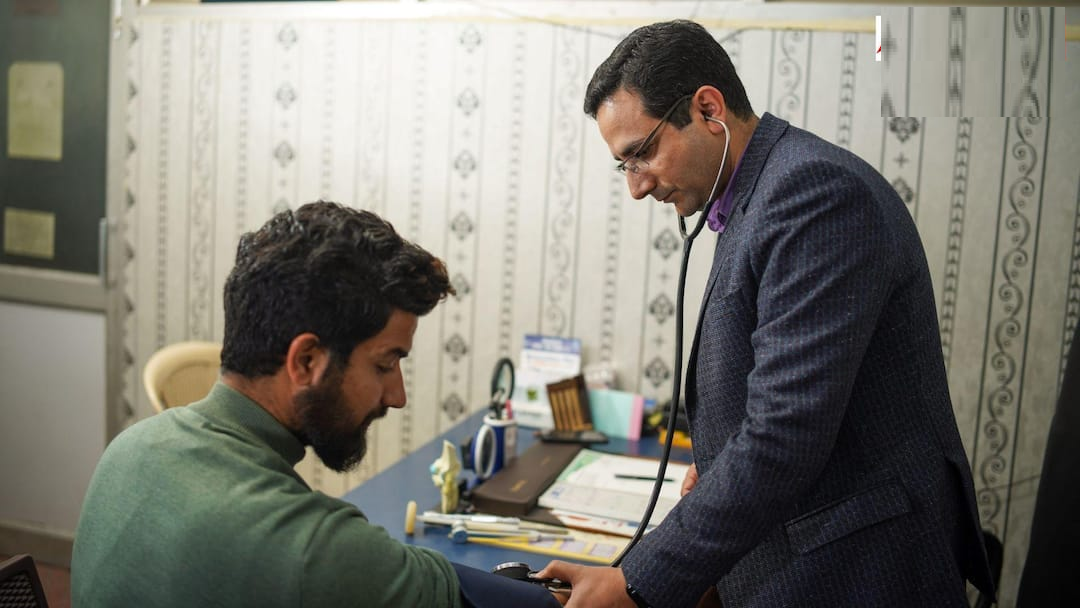
In today's times, as healthcare facilities improve, the cost of treatment is also steadily increasing. Whether it's a minor illness or a serious problem, people have to spend a significant amount of money at every stage, from hospitalization to tests and medications. Consequently, total healthcare expenditure is not just a government budget figure, but is also directly linked to the economic status of the common man.
The latest data from India's National Health Accounts (NHA) for 2023-24 presents a similar picture for the country. According to the report, a total of ₹9.52 lakh crore was spent on healthcare in India, of which ₹4.06 lakh crore was paid out-of-pocket.
Government spending has more than tripled in 10 years.
An important aspect of the report is that the government's financial contribution to health services has increased significantly over the past decade. In 2013-14, the government spent approximately ₹1.30 lakh crore on health services. This amount increased to ₹4.14 lakh crore in 2023-24. The government's share of total health expenditure has now reached 43.5 percent. However, despite increased government investment, the share of government expenditure on health in the country's GDP is 1.43 percent. This shows that while public investment in the health sector has increased, there is still room for improvement compared to needs.
Out-of-pocket medical expenses reduced
According to the report, the share of direct out-of-pocket payments in total healthcare expenditure was 64.2% in 2013-14. This fell to 42.7% in 2023-24, a decline of 21.5 percentage points over a decade. This change indicates an increased role for government healthcare and other financial support systems. Despite this, households spent a total of ₹4.06 lakh crore out-of-pocket in a year, averaging ₹2,901 per person. This includes expenses such as doctor's fees, medicines, tests, and hospitalization.
Private hospitals cost more than government hospitals.
Private hospitals play a significant role in India's healthcare system. According to data, approximately ₹2.67 lakh crore was spent on private hospitals in 2023-24, representing 31.9% of current healthcare expenditure. Treatment costs in private hospitals are higher than in government hospitals. Patients' bills vary depending on the severity of the illness, hospital facilities, and length of stay. This is why health insurance and savings become crucial for families seeking treatment in private hospitals.
Expenditure on medicines is also not less
Not only hospital bills but also the cost of medicines impact people's pockets during treatment. According to the report, approximately ₹2.53 lakh crore was spent on medicines in the country during 2023-24. This represents 30.2% of current health expenditure. Especially people suffering from diabetes, blood pressure, and other chronic diseases have to purchase medicines regularly. Therefore, the cost of medicines impacts their monthly budget.
Despite health insurance, financial pressure persists.
The report indicates that private health insurance expenditures amount to ₹97,167 crore, while government-funded health insurance expenditures amount to ₹33,385 crore. Compared to this, out-of-pocket expenditures are far higher. This clearly demonstrates that despite the expansion of insurance coverage, not every family is fully protected against medical expenses.
There is a need to increase spending on disease prevention.
Another important aspect of the report is the gap between treatment and prevention spending. Hospitalization and treatment accounted for 38.2 percent of total current health expenditure, while prevention accounted for only 8.8 percent. Furthermore, primary health care services accounted for 46 percent. By increasing investment in services such as timely screening, vaccination, and regular health checkups, many diseases can be controlled before they become serious.
There is also a huge difference between states.
Health spending is also not uniform across states. Per capita government health spending in Sikkim was ₹16,026, while in Uttar Pradesh it was only ₹1,399. Meanwhile, the share of out-of-pocket expenditure was 65.2 percent in Kerala and 28.5 percent in Karnataka.