Gold Outlook in India: India's relationship with gold is undergoing a major transformation. For generations, the precious metal has been closely associated with jewellery, weddings, festivals, family wealth and inheritance. But younger consumers, particularly Generation Z, are beginning to approach gold differently.
According to a World Gold Council (WGC) report, India's next phase of gold demand could increasingly be shaped by technology, digital finance and modern investment products rather than being driven solely by traditional jewellery purchases.
The shift is significant because India already holds an enormous amount of privately owned gold. The report estimates that Indian households possess around 31,000 tonnes of gold, valued at approximately ₹315 lakh crore, or $3.4 trillion.
A large part of this wealth remains stored in homes rather than actively participating in the financial system. The WGC believes that new technology-led investment channels and changing attitudes among younger consumers could gradually alter this pattern.
India's Huge Gold Wealth Remains Largely Untapped
Gold has traditionally served several purposes in Indian households.
Apart from its cultural importance, families often view the yellow metal as a store of wealth that can be passed from one generation to another. Jewellery purchased for weddings and festivals can remain with families for decades.
According to the figures cited in the WGC report, Indian households collectively own about 31,000 tonnes of gold.
At an estimated value of ₹315 lakh crore, this represents a massive pool of household wealth.
However, much of this gold remains locked away rather than being actively used as a financial asset. This makes household gold one of India's potentially underutilised stores of wealth.
The next phase of the market could therefore depend not only on how much additional gold Indians buy, but also on how efficiently existing holdings are integrated into the broader financial ecosystem.
Gen Z Is Looking at Gold Differently
One of the biggest changes highlighted by the report is the attitude of younger consumers.
Generation Z — generally referring to people born between 1997 and 2012 — may not view gold solely as jewellery or an asset inherited from parents and grandparents.
For many younger investors, factors such as liquidity, convenience, transparency and digital access are becoming increasingly important.
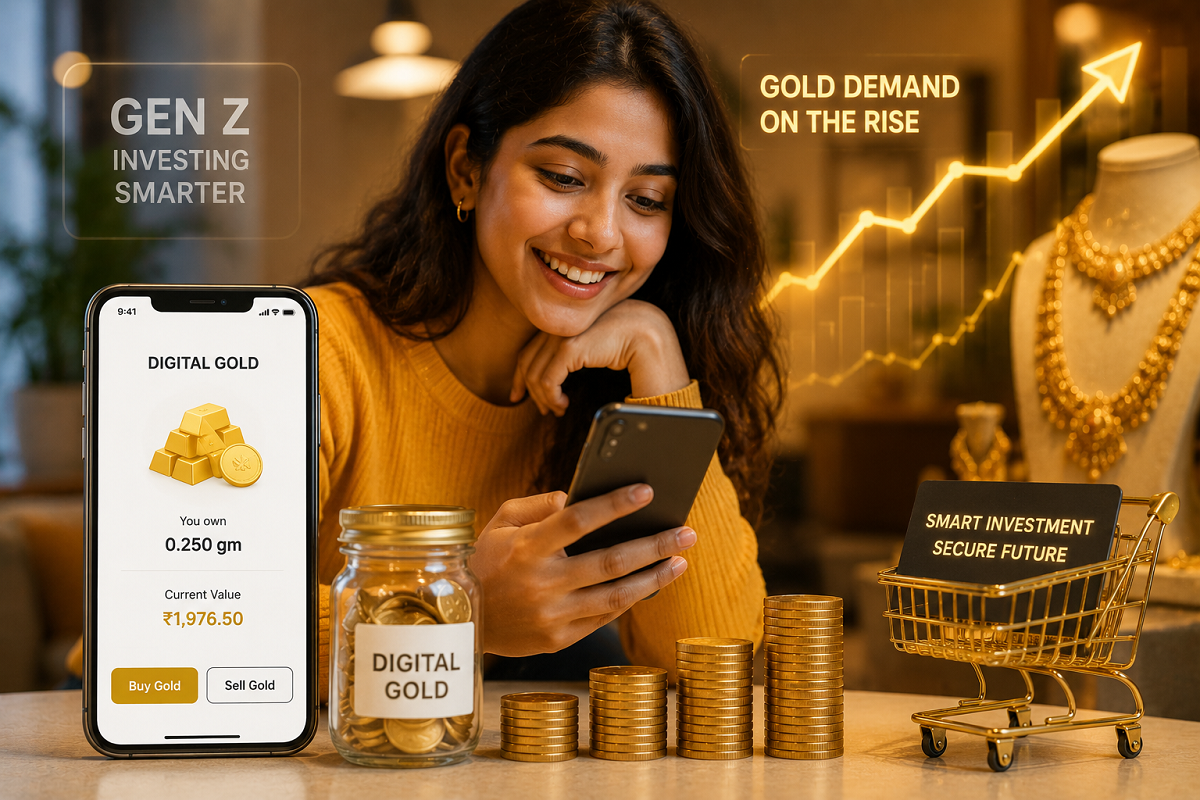
This means a young investor may want exposure to gold without necessarily purchasing a necklace, bracelet, coin or physical gold bar.
Digital investment options can make it possible to gain exposure to the precious metal through technology-enabled platforms, changing how gold fits into an individual's financial portfolio.
Digital Access Could Reshape Gold Investment
Smartphones and digital payments have transformed how Indians manage money, shop and invest.
Gold is increasingly becoming part of this transition.
Instead of visiting a jewellery store every time they want to purchase gold, technology-focused consumers can explore various gold-linked financial products through digital platforms.
The shift is especially relevant for younger investors who are accustomed to managing bank accounts, mutual funds, stocks and other financial products online.
Convenience can also encourage smaller and more frequent investments rather than requiring consumers to accumulate a large amount of money before buying physical jewellery.
However, investors should understand the product they are purchasing. Different gold investment products can have different regulatory structures, costs, liquidity conditions and risks.
Young Consumers Research Before Buying Gold
Another behavioural change is the growing importance of online research.
Younger consumers often compare products, prices, designs and investment options digitally before making a purchase.
This means jewellery companies can no longer depend entirely on traditional retail methods to attract the next generation of customers.
Brands are increasingly required to develop stronger digital channels, improve online discovery and provide greater transparency about products.
Jewellers may also have to adapt designs and purchasing experiences to suit younger buyers who could prefer lightweight products, flexible purchasing options and easier resale or exchange.
In other words, the future gold customer may be as comfortable buying gold through a smartphone as visiting a physical jewellery showroom.
Gen Z Spending Power Could Become a Major Factor
The growing economic influence of Generation Z could have a substantial impact on India's gold industry.
According to estimates cited in the report, Gen Z consumer spending could approach $2 trillion by 2035.
As this generation moves further into the workforce and its disposable income rises, its investment and consumption choices will become increasingly important.
If even a portion of that spending power is directed towards gold, the industry could see significant changes in the type of products consumers demand.
Traditional jewellery is unlikely to disappear from India's gold market. Weddings, festivals and cultural traditions will continue to support physical gold purchases.
However, investment-oriented demand could become an increasingly important part of the overall market.
Gold Is Becoming Part of the Financial Ecosystem
The WGC's broader argument is that gold's role in India could gradually expand beyond jewellery and household savings.
Several mechanisms could help connect privately held gold with the formal financial system.
These include gold recycling networks, electronic gold receipts, bullion banking, technology-enabled gold investment products and initiatives designed to mobilise existing household holdings.
If such systems become easier to use and gain wider consumer acceptance, some of the gold currently stored in households could potentially enter the formal economy.
This would represent an important shift from viewing gold purely as a passive store of wealth towards treating it as a more actively managed financial asset.
Recycling Could Become Increasingly Important
Higher gold prices can also change consumer behaviour.
When prices rise sharply, purchasing large quantities of new jewellery becomes more expensive. Consumers may instead choose to exchange old jewellery, recycle existing gold or explore investment products requiring smaller initial amounts.
A stronger recycling ecosystem could therefore become increasingly important for India's gold industry.
It could also help unlock part of the enormous quantity of gold already held by Indian households rather than requiring all future demand to be met through fresh purchases and imports.
Physical Gold Is Unlikely to Lose Its Importance
The growing popularity of digital investment does not necessarily mean Indians will stop buying jewellery.
Gold's cultural significance remains deeply embedded in weddings, religious occasions, festivals and family traditions.
Physical ownership also offers an emotional and cultural value that purely financial products cannot completely replicate.
The more likely scenario is that India's gold market becomes increasingly diverse.
Consumers may continue buying jewellery for personal and cultural reasons while simultaneously using financial products for investment exposure.
This could create a market where physical and financial forms of gold grow alongside each other.
What Could Drive India's Next Gold Boom?
India's next major phase of gold demand may therefore look very different from previous cycles.
Historically, rising incomes, weddings and festivals were among the dominant drivers of gold consumption. Those factors will remain important, but technology and changing investor behaviour could add another powerful layer.
Generation Z's preference for digital convenience, liquidity and online research could accelerate the adoption of newer gold products.
At the same time, better recycling networks, electronic gold receipts, bullion banking and other financial infrastructure could help bring some of India's existing household gold into productive use.
With around 31,000 tonnes of gold already estimated to be held by Indian households, the opportunity is not limited to selling more new gold. The bigger transformation could involve changing how Indians own, access, invest in and use the precious metal.
If these trends continue, Gen Z may emerge as one of the most influential forces shaping the next chapter of India's gold market.