LIFESTYLE
Geyser or Immersion Rod: Which Is Better for Hot Water in Winter? Compare Cost, Safety and Electricity Use
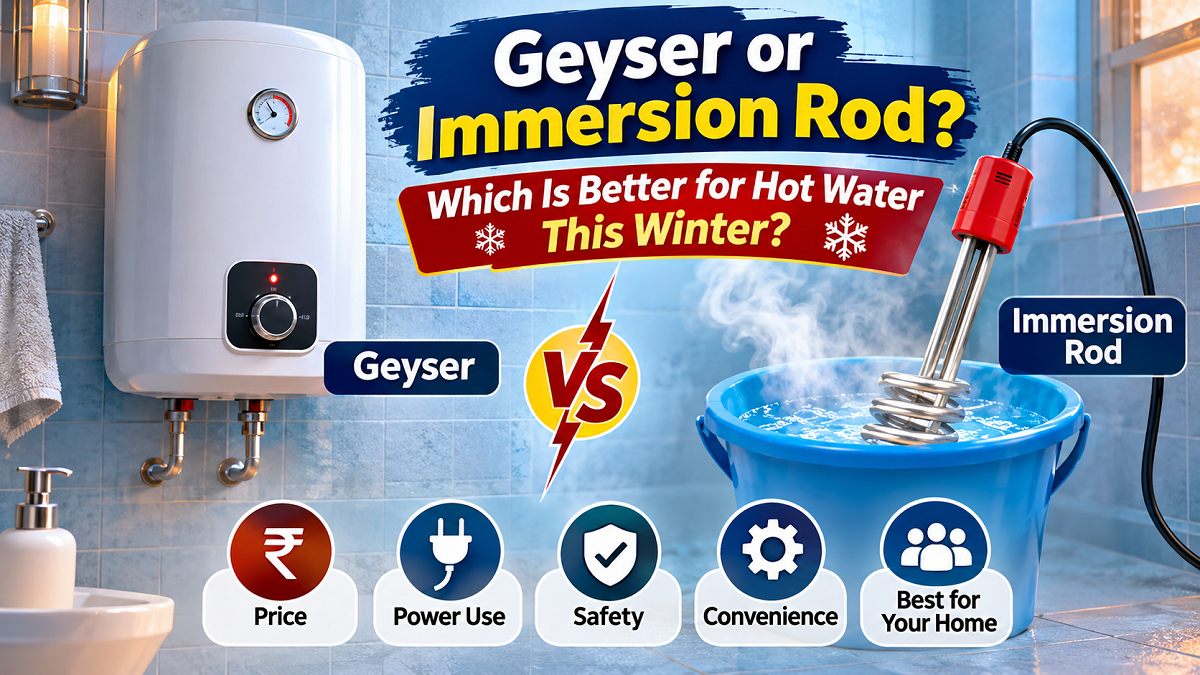
Winter Water Heating Tips 2026: With November bringing cooler temperatures to many parts of India, households are once again preparing for the winter season. From taking a comfortable morning bath to washing clothes and handling everyday household activities, hot water becomes an important part of daily life.
However, choosing the right water-heating appliance can make a noticeable difference to household expenses, electricity consumption and convenience. Electric geysers and immersion rods are among the most commonly used options in Indian homes.
While both appliances serve the same purpose, their operating methods, purchase costs, safety features and suitability for everyday use are different. Understanding these differences can help consumers make a smarter decision before purchasing a water heater this winter.
Geyser vs Immersion Rod: Which Is More Affordable?
For many consumers, the initial purchase price is one of the most important considerations when selecting a water-heating appliance.
Immersion Rod: An immersion heater is generally much cheaper than an electric geyser. It requires no permanent installation and can be used with a suitable water-filled bucket. This makes it attractive to students, tenants and individuals with limited budgets.
Electric Geyser: A geyser typically requires a higher initial investment. Its price depends on storage capacity, heating technology, energy-efficiency rating and built-in safety mechanisms. Installation expenses may also increase the overall cost.
For occasional water heating, an immersion rod may be the more economical purchase. However, a geyser can offer greater convenience for households requiring hot water regularly.
Electricity Bill Comparison: Does a Geyser Consume More Power?
Many people assume that immersion rods always consume less electricity than geysers. However, this is not necessarily true.
Electricity consumption mainly depends on the appliance's wattage, operating duration, quantity of water and temperature increase required.
For example, a 1,500-watt immersion rod operating for 30 minutes consumes approximately 0.75 units of electricity. Similarly, a 2,000-watt geyser running for 30 minutes at full power consumes around one unit.
These figures are illustrative, and actual consumption depends on how long the heating element remains active.
Immersion rods heat water directly and can be practical when only a small quantity is needed.
Storage geysers, meanwhile, use insulated tanks to retain heat. Modern models generally include thermostats that automatically stop heating once the selected temperature is reached.
However, storage geysers may consume additional electricity to compensate for heat lost while water remains in the tank.
Important: Neither appliance is automatically more energy-efficient in every situation. Heating the same quantity of water by the same temperature increase requires broadly similar amounts of thermal energy, although appliance losses can differ.
Which Is Safer for Daily Use: Electric Geyser or Immersion Heater?
Safety should be a major consideration when selecting any electrical appliance that operates near water.
Modern electric geysers commonly feature thermostats, thermal cut-off systems and other protective mechanisms. Storage models may also include pressure-relief valves to prevent excessive pressure buildup.
Nevertheless, proper installation, effective earthing and suitable electrical protection are essential for safe operation.
Immersion rods require additional attention because their heating elements are placed directly inside water-filled containers.
Damaged insulation, defective wiring or accidental contact with water while the appliance is connected to electricity can create a serious electric shock hazard.
Users should always switch off the power and unplug the immersion rod before touching the water, moving the bucket or removing the heater.
A properly installed geyser generally offers greater convenience and reduces the need to handle electrical heating equipment during daily use.
Convenience Matters: Which Appliance Is Better for Families?
Apart from cost and electricity consumption, ease of operation plays an important role in determining the best water heater for a household.
An electric geyser provides hot water through a connected tap or shower system. Once installed, users can heat water without manually placing a heating device inside a container.
Storage geysers are particularly useful in homes where several family members need hot water throughout the day. However, the available quantity depends on tank capacity and reheating time.
An immersion rod requires more manual effort. Users must fill a suitable bucket, position the heater correctly, wait for the water to warm up and disconnect the appliance safely before use.
Although immersion heaters are portable and easy to store, they may be less convenient for larger families.
Geyser vs Immersion Rod: Key Differences at a Glance
| Feature | Electric Geyser | Immersion Rod |
|---|---|---|
| Purchase cost | Generally higher | Generally lower |
| Installation | Usually required | No permanent installation |
| Electricity usage | Depends on wattage, duration and heat losses | Depends on wattage and duration |
| Safety | Built-in protections in many models | Requires careful manual handling |
| Convenience | Suitable for regular use | Better for occasional use |
| Portability | Usually fixed | Portable |
| Best suited for | Families and frequent hot-water needs | Small households and limited budgets |
How to Choose the Right Water Heater for Your Home
The ideal appliance depends on household size, available space, budget and frequency of use.
An immersion rod may be suitable if:
- You need hot water only occasionally.
- Your budget is limited.
- You generally heat one bucket of water at a time.
- You have access to a properly protected electrical connection.
- You can follow all necessary safety precautions.
An electric geyser may be preferable if:
- Your household requires hot water every day.
- Multiple family members use the bathroom.
- You prefer hot water directly from a tap or shower.
- You want a permanently installed heating solution.
- Convenience and automatic temperature control are important priorities.
Consumers purchasing a geyser should also consider the appropriate tank capacity and check applicable energy-efficiency labels.
Essential Safety Precautions During Winter
Regardless of the appliance selected, following basic electrical safety measures can help reduce the risk of accidents.
Always purchase equipment that complies with applicable safety standards and follow the manufacturer's operating instructions.
Ensure that electrical wiring, earthing and sockets are suitable for the appliance's power requirements. Appropriate miniature circuit breakers (MCBs) and residual-current protection devices, such as RCCBs or RCBOs, should be installed by qualified professionals.
Never operate an immersion rod outside the water or with the heating element insufficiently submerged, unless the manufacturer specifically permits that operating condition.
Do not touch the water or heating element while an immersion rod is connected to the power supply. Disconnect the plug before handling the appliance or using the heated water.
For geysers, professional installation and periodic inspection are important. Damaged cables, unusual noises, leakage or malfunctioning temperature controls should be checked promptly by a qualified technician.
Final Verdict: Which Water Heater Should You Buy This Winter?
Both electric geysers and immersion rods can provide hot water effectively, but their advantages depend on how they are used.
An immersion rod is a practical choice for consumers seeking an inexpensive, portable solution for occasional water heating. However, it requires careful supervision and strict electrical safety precautions.
An electric geyser is generally more convenient for families needing hot water regularly. Although its purchase and installation costs are higher, automatic temperature regulation and integrated safety features can make everyday use easier.
The best choice is not simply the appliance with the lowest price or wattage. Consumers should evaluate their daily water requirements, overall operating expenses, installation conditions and safety needs before making a purchase.
Source: Adapted and independently rewritten from a consumer guidance article published by Journal India on November 2, 2026.