Free WiFi has become almost irresistible in public places. The moment people step into a railway station, airport lounge, café or shopping mall, many instinctively search for an open network to save mobile data. While this convenience feels harmless, cybersecurity experts warn that public WiFi is one of the easiest traps for digital criminals. A single careless connection can expose personal data and even empty a bank account.
Public networks are attractive to hackers because they are crowded, open and often poorly secured. Unlike your home router, which is protected by a private password and basic encryption, public hotspots are designed for quick and easy access. That simplicity is exactly what attackers exploit.
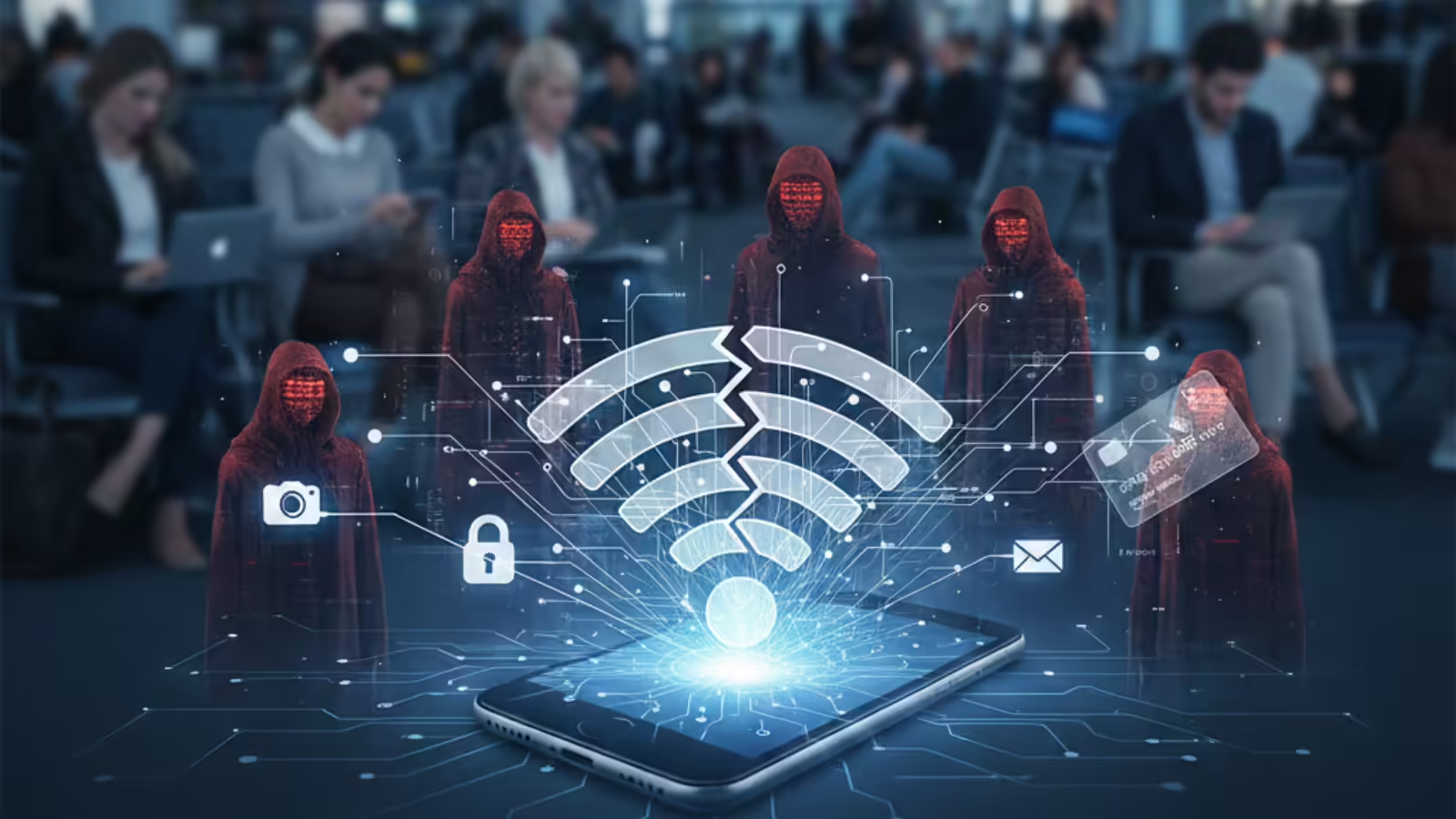
One common trick is the creation of a fake hotspot that looks legitimate. A hacker may set up a network name that closely resembles the real WiFi of a popular café or airport, sometimes with only a tiny spelling difference. Unsuspecting users connect to this duplicate network thinking it is official. From that moment, all their internet activity silently passes through the attacker’s system.
This technique is known as a “man-in-the-middle” attack. Instead of your phone talking directly to the website or app you are using, the hacker secretly sits in between, watching and sometimes altering the data being sent. Because the connection appears normal on the surface, most users never realise they are being monitored.
The danger becomes severe when people perform financial tasks on such networks. Entering a UPI PIN, credit card number, OTP, or net banking password on an unsafe public connection can hand over those details to criminals. In some cases, attackers capture login credentials first and then access the account later to avoid immediate suspicion. Victims often discover the fraud only after money has already been transferred out.
The risk is not limited to stolen passwords. Attackers can also try to push malicious software onto connected devices. If malware is successfully installed, the intruder may gain deep access to the phone. This can allow remote control of the camera and microphone, tracking of location, reading of messages, and recording of keystrokes. Such surveillance is a serious invasion of privacy and can continue even after disconnecting from the public network.
Open WiFi can also expose everyday browsing habits. Emails, social media sessions and cloud accounts may be hijacked if proper encryption is not in place. Once criminals gain control of an email account, they can reset passwords for many other services, creating a chain reaction of compromised accounts.
Staying safe on public WiFi requires a few disciplined habits. First, disable automatic WiFi connection in your phone settings so the device does not join unknown networks on its own. Always verify the exact official network name with staff before connecting in places like cafés or hotels.
Avoid sensitive activities on public WiFi whenever possible. Do not access online banking, make payments, or enter important passwords. If something urgent cannot wait, switch to mobile data instead of the open hotspot.
When you must use public WiFi, prefer websites that use secure encryption, indicated by “https” and a lock icon in the browser. This adds protection by scrambling the data between your device and the website. For stronger safety, use a trusted virtual private network (VPN), which encrypts all internet traffic and makes it far harder for anyone on the same network to spy on you.
Keeping your phone and apps updated is another important defence, as updates often patch security weaknesses that hackers target. Turning off file sharing and Bluetooth while on public networks further reduces exposure.
Ultimately, digital safety depends on user awareness. Free internet may look like a harmless perk, but it can come with hidden costs if used carelessly. Treat every open WiFi network as untrusted by default. A few extra seconds of caution can protect your private data and your hard-earned money from falling into the wrong hands.