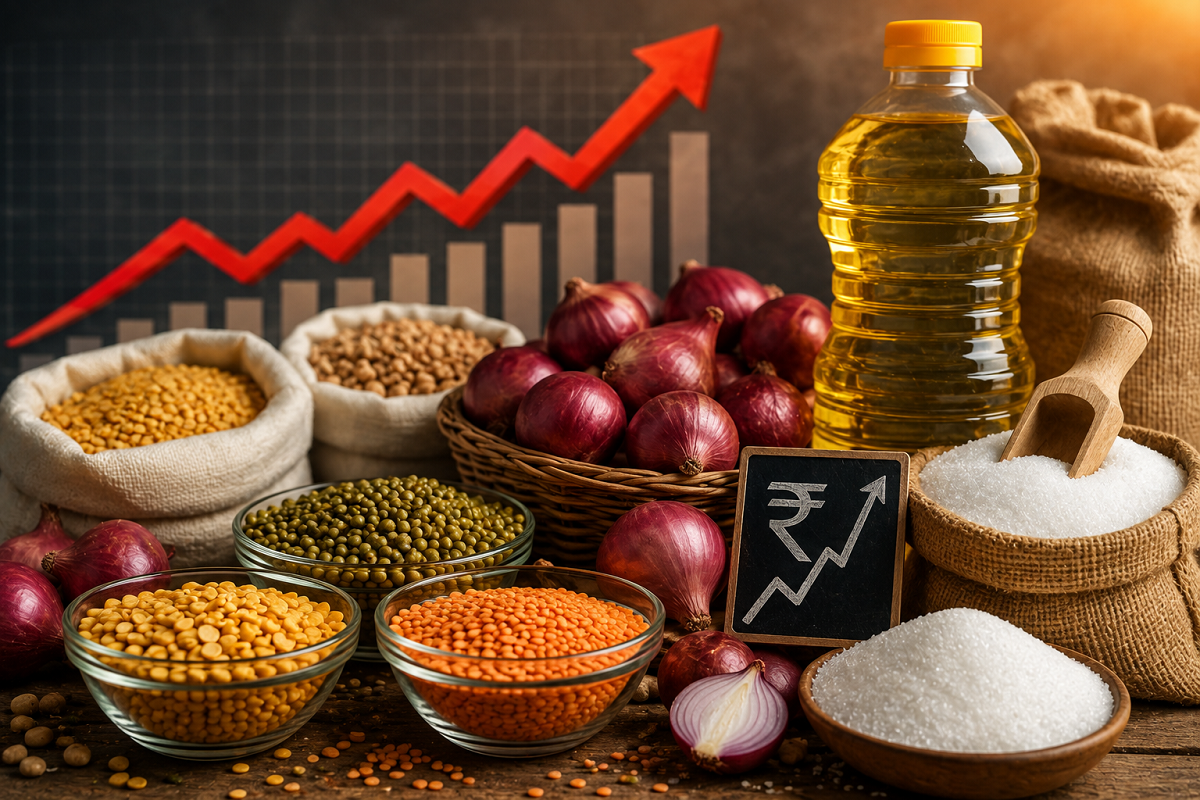
Household budgets are once again coming under pressure as the prices of several everyday food items move higher across India. From sugar and onions to edible oils and pulses, consumers are paying more for kitchen essentials, raising fresh concerns about food inflation ahead of the festive season.
The increase has become noticeable over the past few weeks. In some markets, sugar prices have risen sharply, while onions and cooking oils have also become more expensive. Recent reports indicate that the pressure is not limited to one commodity, with several items in the household consumption basket showing an upward trend.
So, why are food prices suddenly increasing? The reasons differ from one commodity to another, but supply constraints, unpredictable monsoon conditions, global commodity movements and higher input costs are among the major factors influencing the market.
Sugar Prices See a Sharp Jump
Sugar has emerged as one of the biggest concerns.
Domestic sugar prices have risen significantly amid reduced production and tighter availability. The situation became serious enough for the government to permit duty-free imports of 1 million metric tonnes of raw sugar until October 31, 2026, in an effort to increase supply and cool prices.
Sugar stocks have come under pressure just as demand is expected to strengthen during the festive period. India is a major sugar producer as well as one of the world's biggest consumers, making the balance between domestic production and consumption particularly important.
Another factor influencing the sugar market is the use of sugarcane for ethanol production. When more cane is directed towards ethanol, the amount available for producing sugar can be affected.
For consumers, this means sugar prices could remain an important part of the food-inflation story in the coming weeks.
Why Are Onion Prices Moving Higher?
Onions are another essential kitchen item showing price pressure in several markets.
Unlike packaged products, onion prices can change rapidly depending on crop arrivals, weather and transportation conditions. Heavy or poorly distributed monsoon rainfall can damage crops, affect storage and disrupt the movement of vegetables from producing regions to wholesale markets.
Recent monsoon-related disruptions have already affected supplies of some vegetables and other agricultural products.
When arrivals at wholesale markets decline while consumer demand remains steady, retail prices can rise quickly.
The situation can vary considerably between cities because local availability, transportation expenses and wholesale market conditions influence the final price paid by consumers.
Edible Oil Is Adding to Kitchen Expenses
Cooking oil is another major contributor to household food expenditure.
India depends heavily on overseas supplies to meet its edible-oil requirements. This makes domestic prices sensitive to developments in international markets, including changes in palm oil and other vegetable-oil supplies.
Global energy policies can also indirectly influence food prices. For example, greater diversion of palm oil towards biofuel production can reduce the quantity available for food exports, adding pressure to importing countries such as India.
International freight costs, currency movements and geopolitical uncertainty can further influence the landed cost of imported edible oil.
As a result, even when domestic demand remains relatively stable, international developments can make cooking oil more expensive for Indian households.
Pulses Could Also Put Pressure on Monthly Budgets
Pulses are among the most important sources of protein in Indian households, which makes any sustained increase in their prices particularly significant.
Prices can be influenced by crop production, rainfall, market arrivals, inventories and imports. If production expectations weaken or supplies reaching wholesale markets decline, prices can rise.
Since pulses such as tur, urad, moong, masoor and chana are consumed regularly, even a relatively modest increase can have a noticeable impact on monthly grocery expenses.
Consumers should also remember that prices can vary substantially depending on the type and quality of pulses and the city in which they are purchased.
Weather Is Becoming an Important Factor
One common thread connecting many agricultural commodities is the monsoon.
Rain is essential for crops, but both inadequate and excessive rainfall can create problems. Heavy showers can damage standing crops, interrupt harvesting and transportation, and reduce supplies reaching wholesale markets.
Unusual monsoon patterns have already been cited as a factor affecting crop development and market arrivals in parts of the country.
This explains why food inflation can sometimes rise even during an active monsoon season. What matters is not simply how much rain falls nationally, but also when and where it falls.
Broader Inflation Concerns Are Increasing
The rise in food costs comes at a time when policymakers are closely monitoring inflation.
India's consumer inflation stood at 4.45% in July 2026, and the Reserve Bank of India has indicated that it is watching the risk of inflation becoming more broad-based if food, fuel and other input costs continue to increase.
Higher food prices have an immediate effect on household finances because essentials such as vegetables, pulses, cooking oil and sugar are purchased regularly.
The impact can be particularly noticeable for lower- and middle-income families, where food accounts for a larger share of monthly expenditure.
Festive Demand Could Become the Next Key Factor
The coming festive season will be important for food-price trends.
Demand for sugar, edible oils, pulses and other ingredients generally increases as households, sweet shops, restaurants and food manufacturers prepare for higher consumption.
If supplies improve, prices could stabilise. But if demand rises while availability remains tight, consumers may continue to face elevated prices.
The government's decision to allow duty-free raw sugar imports is one example of an intervention aimed at improving domestic availability. Industry participants expect additional supply to help cool the recent sugar-price rally, although imported shipments may take time to reach the market.
For consumers, the next few weeks will therefore be important. Crop arrivals, monsoon conditions, global commodity prices and government supply measures will together determine whether the current increase in kitchen expenses is temporary or develops into a more sustained period of food inflation.