NEWS
Flight Tickets: How does a 4,999 flight ticket turn into 9,000? How do airlines cut corners by showing lower fares?
Flight Ticket Hidden Charges: You may have noticed many times when booking a flight that the ticket initially appears cheap, but when you make the final payment, the fare increases. Why does this happen? Understand.
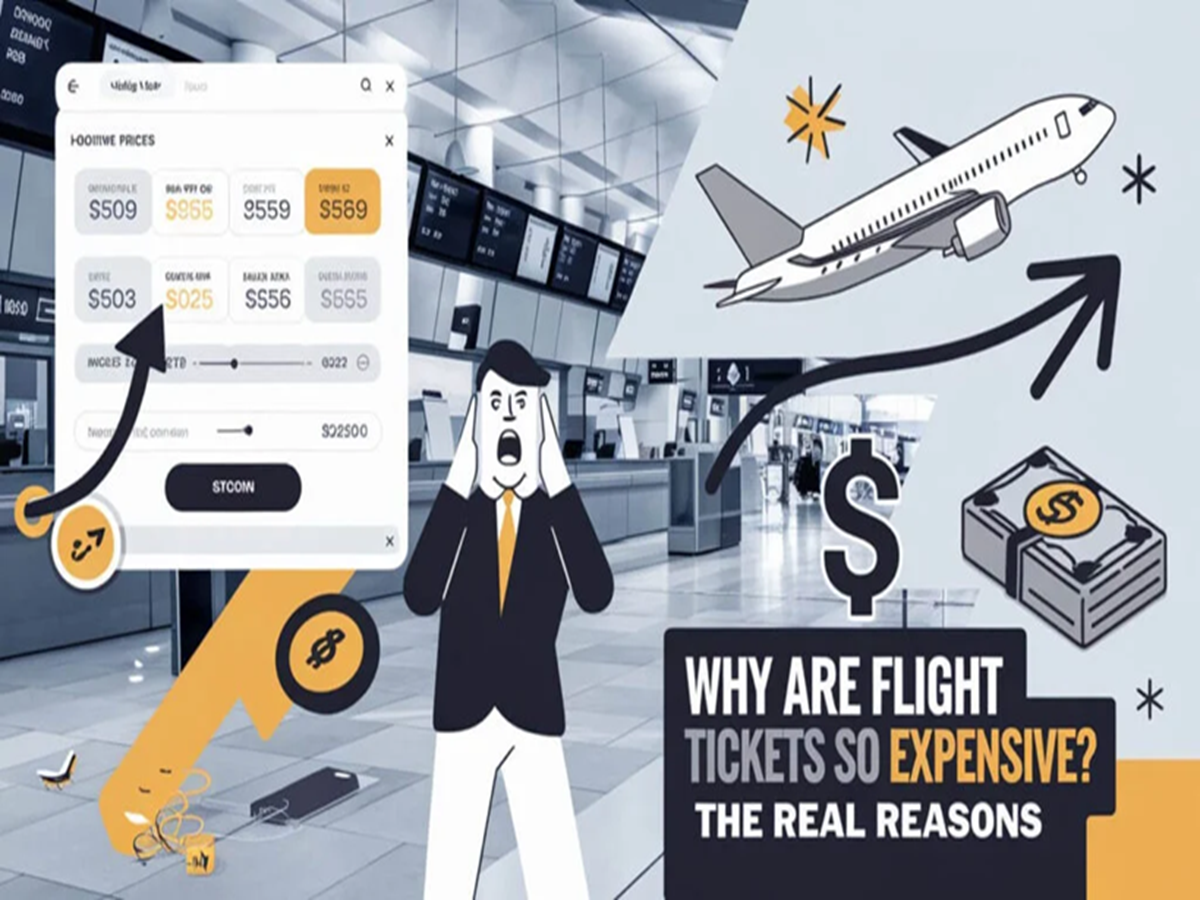
Flight Ticket Booking: You may have experienced this when booking a flight ticket. While searching, the fare appears to be ₹4,999, but by the time you pay, the bill reaches ₹8,000 or ₹9,000. There's the cost of selecting a seat, the cost of a bag, the cost of food, and finally, a convenience fee. This isn't a coincidence, but a well-thought-out business model of airlines and booking platforms.
The matter has now reached the Supreme Court, and the court has directed the central government to introduce new aviation regulations within two weeks, regardless of whether these regulations have been tabled in Parliament yet.
First of all, understand what the scam of cheap tickets is.
Airlines' revenue is no longer driven solely by tickets. Airlines sell some seats on their flights at prices lower than the average cost to attract low-paying customers. These low fares are advertised. The real revenue comes later, in industry parlance, known as ancillary revenue.
Around 14 to 16 percent of airline revenue worldwide now comes from these additional charges. Bags, seats, food, priority boarding—everything is sold separately.
Where does the pocket get cut from booking to boarding?
The first step is search and booking.
Here, you're shown the base fare. Taxes, fuel charges, and airport fees are added as you reach the payment page. Then, there's the travel portal's convenience fee, which ranges from ₹149 to ₹499 per passenger on most major platforms. This money goes to the booking portal, not the airline.
The second step is seat selection.
Choosing a window or preferred seat typically costs between 300 and 800 rupees per flight, and seats with extra legroom cost even more. Families often have to pay separately for each member if they want to sit together.
The third stop is baggage
This is the biggest controversy in this entire story. A petition filed in the Supreme Court states that all private airlines, without any valid reason, have reduced the free check-in baggage limit for economy class passengers from 25 kg to 15 kg, turning a previously included ticket into a new source of revenue. For overweight passengers, charges range from 400 to 750 rupees per kg are levied on domestic flights.
The fourth stage is cancellation and modification.
Usually, a fee of Rs 2500 to Rs 3500 is deducted on cancelling the ticket, which is sometimes equal to the full price of the cheap ticket.
Dark patterns on the screen
The government itself acknowledges that booking platforms use tactics that mislead travelers. In November 2023, the Consumer Protection Authority (CCPA) banned 13 types of dark patterns, including false urgency, basket sneaking, confirmation shaming, and drip pricing.
Simply put, false urgency means repeatedly displaying a message like "Only 2 seats left" on the screen. Basket sneaking means adding items like insurance or meals to the cart without your consent, and drip pricing means revealing the real price at the final payment step.
The scale of this problem is evident from a survey. In a LocalCircles survey, 62 percent of consumers said they frequently encountered hidden charges when booking flights that were not disclosed in advance, while 40 percent said services were added to their cart without their consent.
Such complaints increased further during IndiGo's major crisis in December 2025, when more than 5,000 flights were cancelled in a week. The airline had promised free cancellations and full refunds, but many passengers reported that the cancellation option on the app was not working, and only the option to change the date was visible.
Dynamic pricing, i.e. multiple prices for the same seat
Now the question is how fares fluctuate. Since the repeal of the Air Corporation Act in 1994, airfares in India have been completely market-determined. The government neither sets nor regulates fares. Airlines sell tickets in several price levels, or buckets, known as RBD.
The cheapest bucket sells first, and as seats fill up, the price moves to the next more expensive bucket. This is why fares multiply during festivals or long weekends. The Supreme Court itself cited this example. The bench noted that on the same day, on the same route, one airline charges ₹8,000 for economy class fare, while another charges ₹18,000.
What happened in the Supreme Court, a complete timeline
The case began with a public interest litigation filed by social activist S. Lakshminarayanan. In November, the court sought responses from the central government and other parties. The petition called for a strong and independent regulator to ensure fare transparency and passenger safety. The court even called the exorbitant fare hikes "exploitation."
The petition's most pointed argument is that currently no authority has the power to review or cap fares or additional fees, allowing airlines to exploit consumers through hidden charges and uncertain pricing.
A bench of Justices Vikram Nath and Sandeep Mehta then asked the central government why there was a delay in notifying the new aviation rules. The central government explained that the draft rules under the Indian Aircraft Act 2024 had been finalized and were currently being translated, after which they would be tabled in both houses of Parliament for 30 days.
The government stated that these rules would be tabled in Parliament during the monsoon session, which runs from July 20 to August 13. However, the court refused to wait and directed that a sealed copy of the rules be submitted to the court within two weeks, regardless of whether they were tabled in Parliament or not. The next hearing will be held on August 3.
The petitioner's lawyer said in the hearing that airlines are very powerful and need an independent regulator and not just a bureaucratic structure.
What could change next?
All eyes are now on the regulations of the Indian Aircraft Act 2024. If they include a robust mechanism for monitoring fares and additional charges, this will be the biggest change in Indian aviation since 1994. Until then, the lesson for travelers is clear: carefully read every charge until the last page of the booking, remove items automatically added to the cart, and remember that the cheapest price displayed on the screen is often not the full story.