Airplane Mode Rules: If you have ever travelled by air, you have probably heard the cabin crew asking passengers to switch off their mobile phones or activate Airplane Mode before take-off. The announcement is a routine part of air travel, but many passengers are unaware of the technical reasons behind it.
Have you ever wondered whether a mobile phone can actually interfere with an aircraft's systems? Could leaving your phone connected to a mobile network create a safety problem?
The answer involves radio signals, aviation communication systems and precautionary safety procedures.
Although a single mobile phone left on is extremely unlikely to cause an aircraft accident, airlines follow strict procedures to minimise avoidable risks.
Here is what passengers should know about Airplane Mode and why it matters during a flight.
1. Mobile Phone Signals Can Potentially Interfere With Aircraft Equipment
Mobile phones communicate with cellular towers by transmitting and receiving radio-frequency signals.
When a phone operates normally, it continuously searches for available networks and maintains a connection with nearby towers.
During a flight, particularly at higher altitudes, maintaining a connection with ground-based cellular networks can become difficult.
As the aircraft moves rapidly, the phone may repeatedly attempt to connect to different towers.
Electronic devices emit radio-frequency energy, and under certain circumstances, unwanted electromagnetic interference can affect other electronic equipment.
Aircraft are designed and tested to withstand a range of electromagnetic disturbances. Nevertheless, aviation authorities and airlines apply restrictions to minimise potential interference with sensitive systems.
Activating Airplane Mode disables the phone's normal cellular transmission functions, helping reduce this concern.
2. Clear Communication Between Pilots and Air Traffic Control Is Essential
Pilots depend on reliable communication with Air Traffic Control (ATC) throughout a flight.
Air traffic controllers provide important information about aircraft movements, altitude assignments, route changes, weather conditions and landing instructions.
Clear communication becomes especially important when an aircraft is approaching a busy airport or operating in challenging weather.
Electromagnetic interference can potentially affect radio equipment, although modern aircraft communication systems are designed with extensive protections.
Some people may remember hearing buzzing or clicking noises from speakers when older mobile phones were receiving calls.
This was an example of radio-frequency interference affecting nearby audio equipment.
However, aircraft communication systems are far more sophisticated than ordinary speakers, and such household examples should not be taken as evidence that a mobile phone will disrupt an aircraft's radio.
The restriction is primarily a precaution intended to maintain a controlled electronic environment.
3. Why Is Airplane Mode Especially Important During Take-Off and Landing?
Take-off and landing are among the most demanding phases of a flight.
During take-off, pilots must monitor aircraft speed, engine performance, flight instruments and instructions from air traffic controllers.
Landing involves additional considerations, including runway alignment, visibility, aircraft configuration and weather conditions.
Airlines therefore place particular emphasis on following safety procedures during these stages.
Passengers are generally asked to secure their belongings, fasten seat belts and ensure electronic devices comply with the airline's operating instructions.
Keeping phones in Airplane Mode is one part of these wider safety precautions.
It also helps passengers remain attentive to important cabin announcements and crew instructions.
4. Can a Mobile Phone Cause an Aircraft to Crash?
There is no established evidence that an ordinary passenger mobile phone left connected to a cellular network will, by itself, cause a modern commercial aircraft to crash.
Commercial aircraft contain multiple layers of protection, and their electronic systems are designed to meet demanding aviation safety standards.
However, aviation safety rules are not based solely on whether a particular event has previously caused an accident.
They also aim to prevent foreseeable hazards, including low-probability technical interference.
That is why passengers are expected to follow the airline's instructions even when the immediate risk appears small.
Leaving a phone out of Airplane Mode should not be interpreted as an automatic emergency, but it can still violate applicable airline procedures.
5. What Happens When You Activate Airplane Mode?
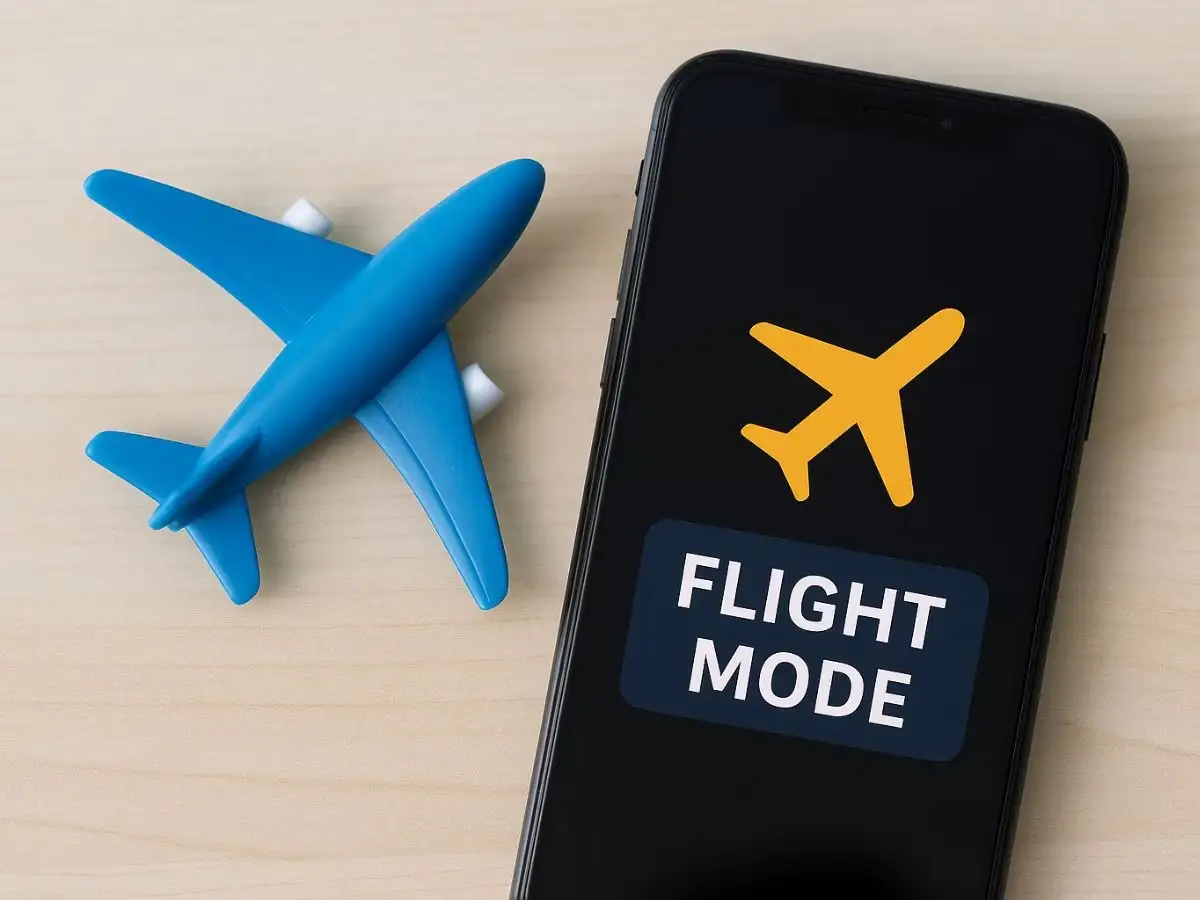
Airplane Mode is a smartphone setting that disables cellular network connectivity.
Once activated, the phone stops using its normal mobile connection for calls, SMS and cellular internet access.
Depending on the device, Wi-Fi and Bluetooth may also switch off initially, although many modern smartphones allow these functions to be enabled separately while Airplane Mode remains active.
Passengers can usually continue using offline features such as downloaded movies, music, e-books, photographs and games.
If an airline provides approved onboard Wi-Fi, passengers may be allowed to reconnect to that service without switching cellular connectivity back on.
6. Can You Use Wi-Fi and Bluetooth During a Flight?
Many airlines now offer onboard Wi-Fi services that allow passengers to browse the internet or use messaging applications.
These services operate through aircraft-approved communication systems.
Bluetooth headphones and other short-range accessories may also be permitted, depending on the airline's rules.
However, availability and restrictions differ between airlines, aircraft types and jurisdictions.
Passengers should always follow the instructions provided by the cabin crew.
Airplane Mode does not necessarily mean that every wireless function must remain disabled throughout the journey.
The key distinction is between ordinary cellular connectivity and wireless services specifically permitted onboard.
7. Does Airplane Mode Help Save Battery Life?
Airplane Mode can also reduce unnecessary battery consumption.
When a phone struggles to maintain a cellular connection, it may use additional power searching for available networks.
This can happen during flights when the device is far from suitable ground-based mobile towers.
Switching to Airplane Mode prevents repeated cellular network searches.
As a result, passengers may notice better battery life during long journeys, particularly if they are using downloaded content instead of cellular services.
8. What Should Passengers Do Before and During a Flight?
Passengers can follow a few simple precautions to comply with airline safety instructions:
- Activate Airplane Mode when instructed by the cabin crew.
- Switch off the device completely if the airline specifically requires it.
- Use onboard Wi-Fi only when the airline permits it.
- Connect Bluetooth accessories only when allowed.
- Avoid reactivating normal cellular connectivity until permission is given.
- Pay attention to safety announcements, particularly during take-off and landing.
Following these instructions helps maintain consistent safety procedures throughout the flight.
Final Thoughts
Airplane Mode is more than a routine setting on your smartphone. It is part of the precautionary procedures used to manage electronic devices onboard aircraft.
The main concern is the potential for radio-frequency interference, along with the need to maintain reliable aviation communication and comply with applicable wireless transmission restrictions.
Modern aircraft are designed with strong safety protections, and an ordinary mobile phone is not expected to cause a crash simply because it remains connected to a cellular network.
Nevertheless, passengers should follow airline instructions and use only permitted wireless services during the journey.