NEWS
Explained: Now that crude oil has become cheaper, why not petrol, diesel, LPG, and CNG? Why are consumers not getting their due?
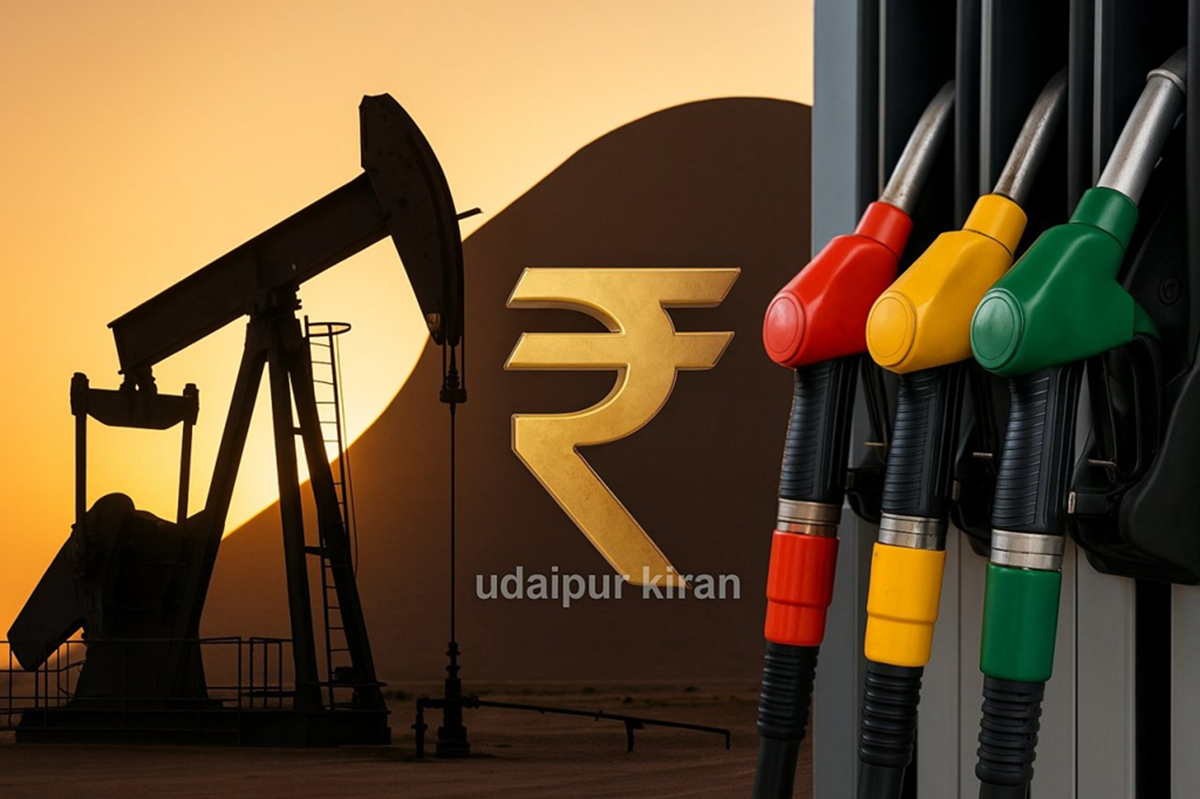
Petrol Diesel Price: The prices of petrol, diesel, LPG, and CNG are not directly linked to crude oil. Refining, transportation, margins, and, most significantly, taxes are included. Taxes alone account for 40-55% of the oil price.
When will oil and gas become cheaper?
This question comes toPause Unmute Remaining Time -4:16Close Players cheaper in the international market, why don't the prices of petrol, diesel, LPG, and CNG decrease here? By June 28, 2026, Brent crude had fallen from $120 per barrel to below $80. Despite this nearly 30% drop, petrol and diesel prices in India remain unchanged. To understand the full mathematics behind this, we need to understand the costs involved in producing these four products from crude oil and how their prices increase manifold by the time they reach the consumer...
1. Petrol: How oil worth Rs 37 is sold for more than Rs 100
According to the Petroleum Planning and Analysis Cell, to understand the price of petrol, we need to look at each stage of it:
- India imports about 90% of its crude oil needs from abroad. This oil is purchased in dollars. If the price of crude is $80 per barrel and a barrel contains 159 liters of oil, then the cost of one liter of crude oil comes to about 50 rupees (when the dollar is worth 83 rupees).
- It's important to understand here that a barrel of crude oil doesn't just make petrol. A barrel produces approximately 72-78 liters of petrol, 38-46 liters of diesel, 8-10 liters of LPG, and a few other things. Therefore, the price of petrol can't be calculated simply by dividing by 159.
- Converting crude oil into petrol costs around $3-5 per barrel (approximately 250-400 rupees), or about 3 rupees per liter. This includes refinery energy consumption, labor, and maintenance.
- The oil companies IOC, BPCL, and HPCL earn a margin of around 8-11 rupees per liter. The dealer (pump owner) earns a commission of around 4 rupees per liter. Refiners also earn a profit of around 4-6 rupees per liter. This totals around 16-21 rupees per liter.
- The real story begins with taxes. The central government levies an excise duty of around ₹20 per liter. In addition, state governments impose VAT of around ₹25-30 per liter. The total tax in Delhi is around ₹28.9 per liter, while in Maharashtra it is even higher.
- In June 2026, petrol was selling at ₹102.12 per liter in Delhi. This means that the price of crude oil was around ₹50, but taxes and other expenses pushed it past ₹100. Taxes alone account for approximately 40-55% of the total price.
2. Diesel: Why is it slightly cheaper than petrol?
According to the Petroleum Planning and Analysis Cell, the price calculations for diesel are similar to those for petrol, with a slight difference:
- One barrel of crude oil produces approximately 38-46 liters of diesel. Refining costs for diesel are also about the same, at around ₹3 per liter.
- The central government's excise duty on diesel is around Rs 16-17 per litre, which is slightly less than petrol.
- State VAT is also lower than petrol, as diesel is considered an "essential" fuel, powering trucks, buses and agricultural machinery.
- Diesel was selling at Rs 95.20 per litre in Delhi in June 2026. In Mumbai, it was Rs 97.83.
3. LPG: The subsidy game
The price calculation for LPG (cooking gas) is slightly different from that for petrol and diesel. According to a report by Investing.com, one barrel of crude oil produces approximately 8-10 liters of LPG. Refining LPG also incurs costs, but its price is determined by the price of LPG in the international market, not directly by the crude itself. LPG prices:
- International LPG price – which is determined by the price of crude.
- Ocean freight and insurance – The cost of bringing LPG to India by ship.
- Refining and filling charges – This includes the cost of filling the cylinder.
- Company Margin – Profit of IOC, BPCL, HPCL is calculated.
- Dealer CCompany Margin – The profit of IOC, BPCL, and HPCL is calculated.ntral and state governments impose taxes like petrol.
Subsidies play a major role: The government provides subsidies on LPG. The subsidy on a typical 14.2 kg cylinder ranges from ₹420-₹465. On June 7, 2026, the price of LPG was increased by ₹29 per cylinder. Under the Ujjwala Yojana, a subsidized cylinder costs ₹642.
Despite this, LPG isn't getting cheaper because its price isn't directly linked to crude. It's determined by the international market price of LPG, which moves independently of crude. Furthermore, the government keeps taxes on LPG low, but it can pass on the increased cost to consumers by reducing subsidies.
4. CNG: Available at half the price of petrol
Compressed Natural Gas (CNG) is considered a cheaper alternative to petrol and diesel. CNG is produced from natural gas, not crude oil. Natural gas is compressed to produce CNG. Its price ranges from:
- The price of natural gas – which is determined by both the international market and government control.
- Compression – The cost of compressing the gas to produce CNG.
- Pipelines and Transport – The cost of getting the gas to the pump.
- Company Margin – Profit of Indraprastha Gas Limited (IGL) and other companies.
- Taxes – Central and state taxes (but much less than petrol-diesel).
Direct taxes on CNG are low. The government considers it an "environmentally friendly" fuel. However, the price of CNG depends on the price of natural gas, which is different from crude. Still, in Delhi, CNG is cheaper than petrol by about 20 rupees per kg. The price of CNG in Delhi is 83.09 rupees per kg, while in Bengaluru it is 111.68 rupees per kg.
Why are prices not falling despite crude becoming cheaper?
According to the Trading Economics report, there are five major reasons why crude oil is not getting cheaper:
- The high-priced stock hasn't run out: Oil companies don't buy oil overnight. In April-May 2026, when crude oil was $100-$120 per barrel, companies purchased large quantities of high-priced oil. Union Minister Hardeep Singh Puri said, "Companies are still processing the high-priced crude oil." It takes 30-45 days for low-priced oil to reach refineries.
- 15-day average formula: Oil companies base their retail prices on the average import cost over the past 15 days or one month. If oil suddenly becomes 30% cheaper, the impact on the average will be gradual, not immediate.
- Government revenue from taxes: The government receives significant taxes on petrol and diesel. In the fiscal year 2023-24, the government earned approximately ₹7.5 lakh crore from the petroleum sector. If the government reduces taxes, it will have to reduce this revenue.
- Rupee weakening: Crude oil is purchased in dollars. If the rupee weakens, the dollar's value increases, making imports more expensive. In June 2026, the rupee was around 94-95. If $1 is equal to 95 rupees, then oil priced at $80 per barrel costs 7,600 rupees per barrel.
- Geopolitical risks: Oil prices have fallen due to easing tensions in West Asia. However, problems such as shipping traffic congestion and supply delays in the Strait of Hormuz remain. Companies fear that prices could rise again tomorrow, so they are reluctant to cut prices too quickly.
So when will consumers get relief?
According to experts, relief depends on the following factors:
- If crude oil remains stable around $80 per barrel and the rupee remains strong, prices could ease slightly in 30-45 days, once the expensive stocks are depleted.
- If the government does not reduce the excise duty, the relief will be very little.
- Without tax cuts, prices are not expected to fall by more than Rs 5-7 per litre.
- The prices of LPG and CNG depend on factors other than crude, so they will not change immediately.
For now, consumers will have to be patient and keep an eye on the decisions of companies in the next few weeks.