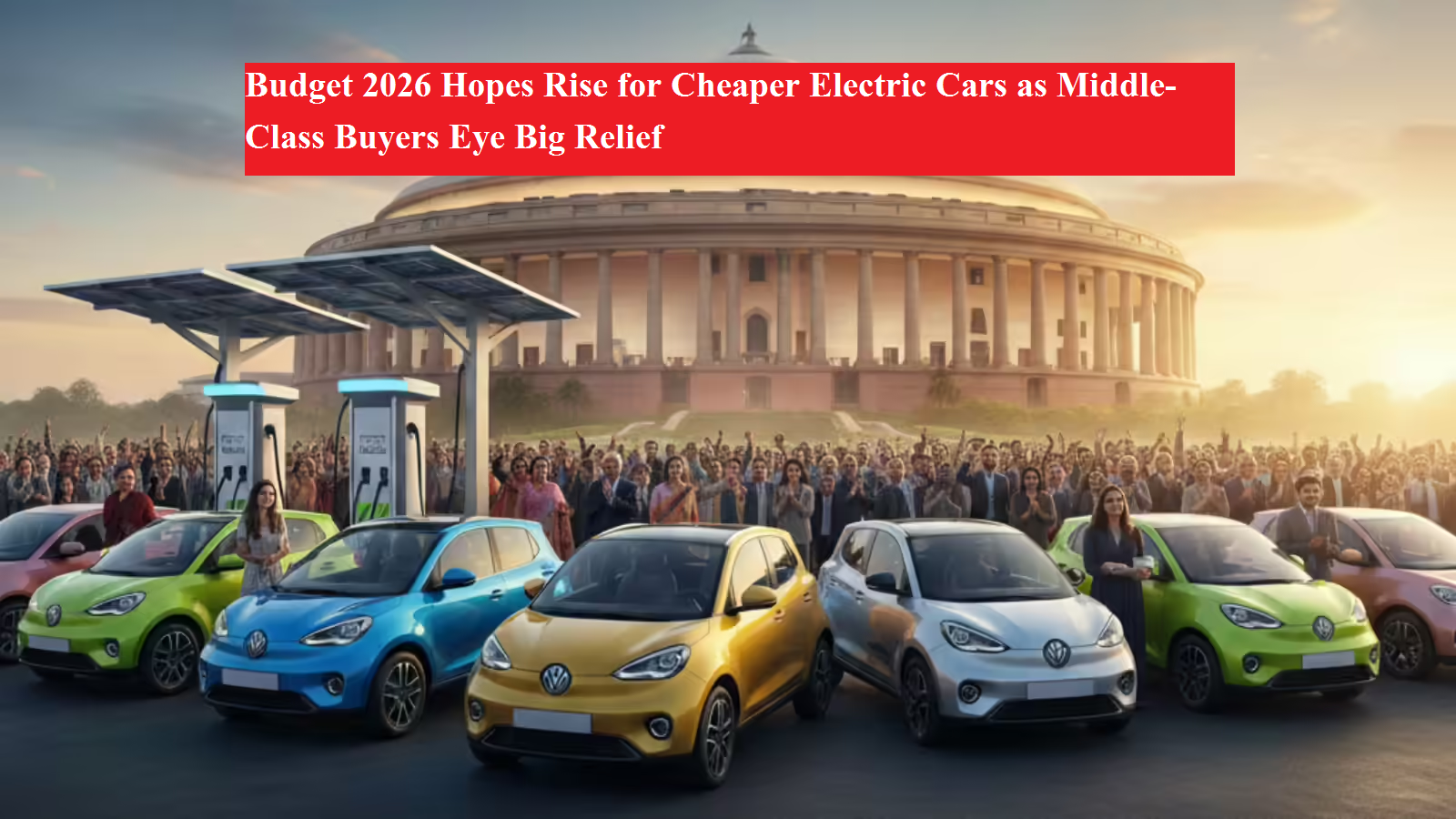
India’s electric vehicle (EV) landscape is evolving at a rapid pace, and the upcoming Union Budget 2026 could become a turning point for millions of aspiring car buyers. With growing awareness about cleaner mobility and lower running costs, more consumers are looking at electric cars as a practical alternative to petrol and diesel vehicles. Now, all eyes are on the February 1 budget announcement, where fresh policy support could make entry-level electric cars significantly more affordable for the middle class.
In recent years, electric vehicle adoption has gained momentum, but most of the growth has been concentrated in higher-priced models. Premium EVs have found buyers among early adopters, while budget-friendly electric cars are still struggling to break into the mass market. Industry leaders argue that without targeted incentives for lower-priced models, large-scale adoption will remain limited.
Major automobile manufacturers have urged the government to introduce focused benefits for affordable electric cars. According to industry feedback, incentives aimed only at high-end or commercial vehicles do not fully unlock the potential of the broader passenger car market. If policy support extends to entry-level private cars, it could sharply expand demand and bring electric mobility within reach of ordinary households.
There is also a strong push to support electric vehicles used in fleet operations such as taxis and shared mobility services. Encouraging electrification in these high-usage segments can create visible scale, reduce urban pollution and improve total cost economics through heavy daily usage. However, experts believe that true transformation will happen only when private buyers also find EVs financially comparable to traditional cars.
At present, the central government promotes electric mobility through a large incentive programme that primarily targets commercial and fleet vehicles. While this has helped accelerate adoption in certain segments, privately owned passenger cars have not fully benefited from the same level of direct support. Analysts suggest that widening the scope of incentives to include personal-use electric cars could immediately lower on-road prices.
Taxation will play a crucial role in this equation. Any reduction in indirect taxes on electric cars or their key components can directly reduce purchase costs. In addition, easier and cheaper financing could be a game changer. If banks and financial institutions are encouraged to offer lower interest rates on EV loans, monthly instalments would become more manageable, making electric cars competitive with conventional vehicles not just in running cost but also in upfront affordability.
Another critical factor is charging infrastructure. Buyers remain cautious when public charging networks are sparse or unreliable. Dedicated budget allocations to expand fast-charging stations along highways, in cities and in residential areas would increase buyer confidence. A stronger charging ecosystem would also improve resale values and reduce range anxiety, two major barriers for first-time EV customers.
Beyond immediate price relief, policy support can reshape the industry’s long-term cost structure. Incentives for domestic research, battery development and local manufacturing of components can gradually reduce dependence on imports. As production volumes rise and supply chains deepen locally, economies of scale can bring down manufacturing costs. Over time, this structural shift could make electric cars naturally cheaper even without heavy subsidies.
For the broader economy, affordable EVs promise multiple benefits. Lower fuel imports, cleaner air, new manufacturing investments and high-skill jobs in battery and electronics sectors all contribute to sustainable growth. For households, the appeal is simple: lower fuel bills, reduced maintenance and a quieter, smoother driving experience.
Whether Budget 2026 delivers immediate price cuts or sets the foundation for gradual affordability, its direction will be crucial. If the government combines tax relief, financing support and infrastructure investment with incentives for local production, electric cars could move from a niche choice to a mainstream option.
For now, prospective buyers are watching closely. A supportive budget could unlock pent-up demand and put reasonably priced electric cars within reach of middle-class families. If that happens, the shift towards cleaner and more economical personal mobility could accelerate dramatically in the years ahead.