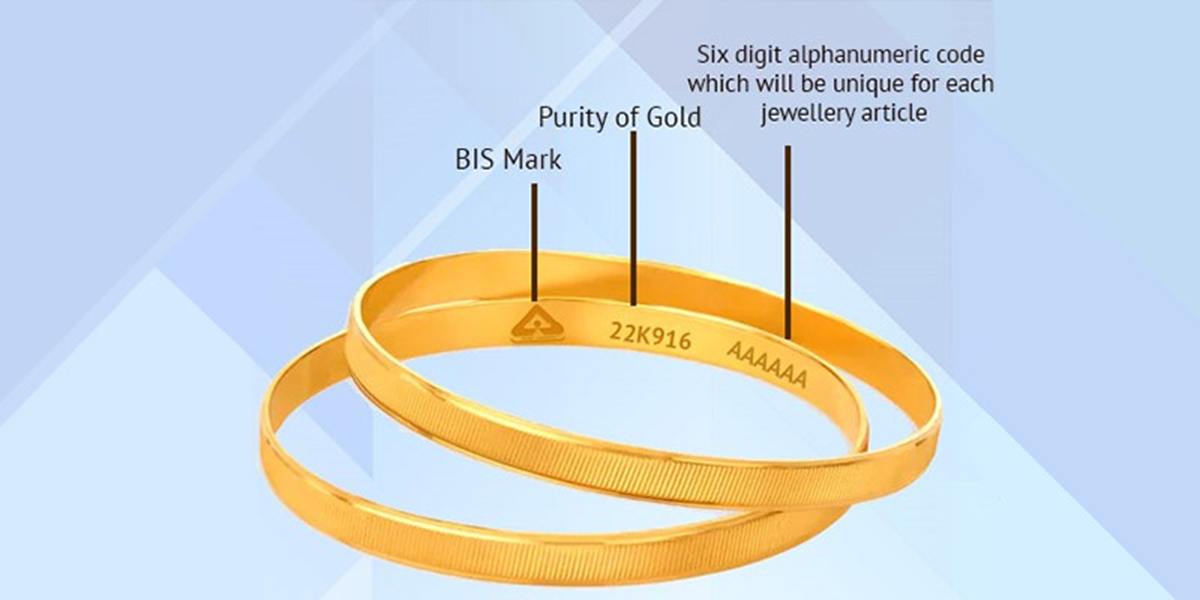
Jewellery Purity: If you have hallmarked gold, first check the BIS standard mark, purity or fineness mark, and six-digit letter-number code i.e., HUID.
How to identify gold?
How to Check Gold Purity: Whether it's your mother's old gold necklace at home or a ring you bought online, it's not always easy to determine whether the gold is genuine just by looking at it or holding it in your hand. Especially when gold's price is so high, it's natural to have doubts about its purity. This begs the question: how to identify gold and can its purity be tested at home?
There are some simple ways to test gold, but it's important to understand one thing: Home tests can only provide a preliminary estimate. They don't completely certify the purity of gold. When testing gold in India, the first thing you should look for is the BIS hallmark and HUID.
First, look at the BIS hallmark
If you have hallmarked gold, first look for the BIS standard mark, the purity or fineness mark, and a six-digit alphabetic code, known as HUID. The purity mark indicates the purity of the gold. For example, 22K916 indicates 22-carat gold with 91.6 percent purity. Similarly, 18K750 indicates 18-carat gold with 75 percent purity, while 14K585 indicates 14-carat gold.
If the jewelry has a HUID code, there's no need to stop at just looking at it. The HUID verification feature in the BIS Care app can also be used to verify the relevant information.
Can gold be tested at home?
Yes, some simple tests can be performed at home, but they shouldn't be considered definitive proof of gold's purity. Gold jewelry isn't always made of 24-carat pure gold. Other metals are often added to enhance its strength. This is why different pieces of jewelry may react differently to home testing. Testing can be even more challenging for gold-plated jewelry. Therefore, just because a piece passes a home test, it doesn't mean it's completely solid gold or definitely 14-carat, 18-carat, or 22-carat.
Do a preliminary check with a magnet
The easiest way to test gold at home is with a magnet test. Gold itself is not a magnetic metal. Place the jewelry on a flat surface and hold a strong magnet near it. If the jewelry is strongly attracted to the magnet, it may raise questions about its metal quality. However, if it is not attracted to the magnet, it does not necessarily mean it is genuine gold. Many other metals are also not attracted to magnets.
You can also test it by putting it in water.
You may have often heard that real gold sinks in water. This is because gold is very dense. However, simply sinking in water doesn't prove that a piece of jewelry is pure gold. Many other metals can also sink.
The density of gold can be estimated based on its weight and the amount of water it displaces. However, other metals in the jewelry, its hollow design, and stones can affect this result.
See hallmark, magnet, and jewelry surface all three.
If you're doing a preliminary home gold test, it's best to combine multiple tests rather than relying on a single one. First, check the BIS hallmark and HUID. Next, pay attention to the jewelry's color, whether any foreign metals are visible or if any areas are peeling off. A magnetic test can then be used as an additional indicator. If, after these tests, the jewelry remains questionable, it's best to have it tested by an expert rather than attempting further experiments at home.
Beware of the vinegar, lemon, and toothpaste test
Many home tests for testing gold are offered online, including vinegar, lemon, toothpaste, bleach, and makeup. However, caution is needed with these methods. Toothpaste can be abrasive, affecting the surface or coating of the jewelry. Household chemicals can damage some jewelry and its stones. If the gold jewelry is set with pearls, emeralds, opals, or other sensitive gemstones, such home experiments should be avoided. A simple attempt to test the gold could damage the jewelry or its stones.
It is better to check with an expert to know the exact purity.
If you have serious doubts about the purity of an old piece of jewelry or are purchasing an expensive piece, it's a better option to have it tested by an expert. Jewelers and testing centers can verify the metal's composition and purity using techniques such as electronic testing, touchstone or acid testing, and X-ray fluorescence. When purchasing new jewelry, it's easier to purchase gold that already has a BIS hallmark and verify its hallmark and HUID information.
There is also a difference between carat and karat.
Carats, or kt, are used to indicate the purity of gold. 24-carat gold is the purest, while 18-carat gold contains 75 percent gold and has a fineness mark of 750. Carats, or ct, are used to measure the weight of gemstones. One metric carat is equal to 200 milligrams. Therefore, a 1-carat ruby in an 18-carat gold ring indicates the weight of the gemstone, not the purity of the gold.