Business
Aadhaar Card Rules 2026: Delhi High Court Says Aadhaar Alone Cannot Prove Date of Birth for Retirement
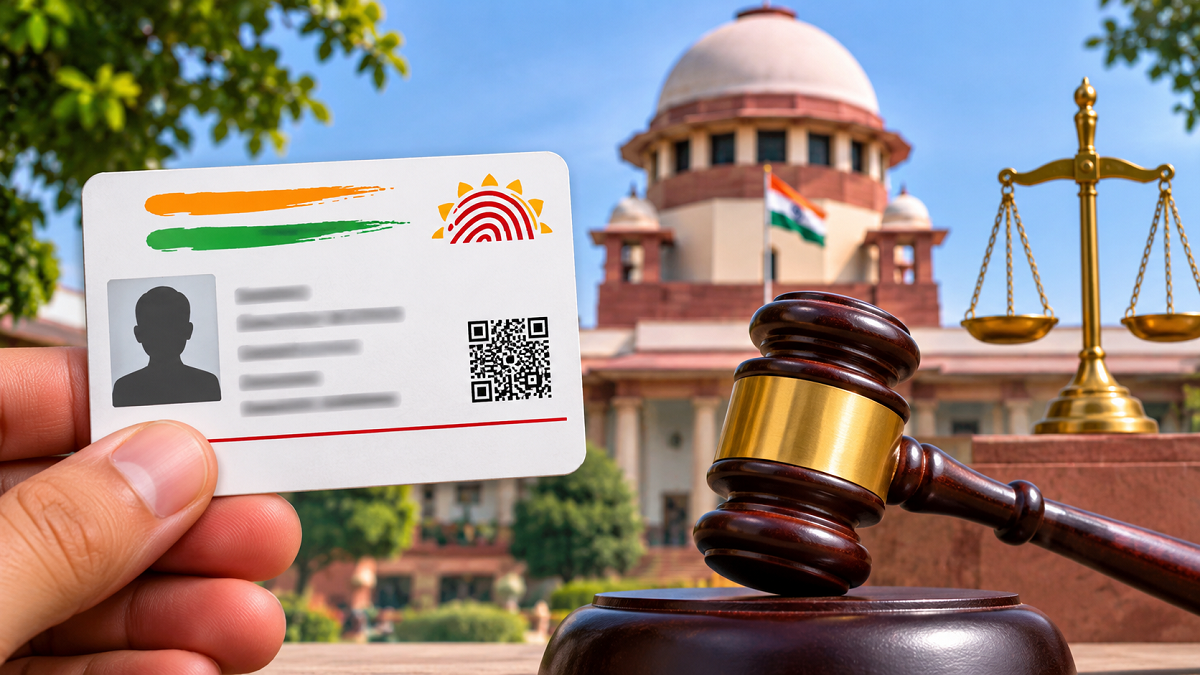
Aadhaar Card Update 2026: The Delhi High Court has delivered an important ruling concerning the use of Aadhaar cards as proof of age in employment-related disputes. According to the reported judgment, Aadhaar primarily serves as an identity document and cannot automatically be treated as conclusive evidence of a person's date of birth.
The decision has significant implications for employees, employers and organisations that rely on Aadhaar information while verifying personal details.
The court reportedly observed that an employee cannot be retired or removed from service solely because of the birth year recorded on their Aadhaar card, particularly when other employment records or legal requirements are relevant.
The ruling also highlights the importance of following applicable labour laws before terminating an employee's services.
Here is a detailed explanation of the reported Delhi High Court decision, the legal status of Aadhaar as proof of date of birth, and what it means for ordinary citizens.
Delhi High Court Clarifies Aadhaar's Role as Identity Proof
Aadhaar is widely used across India for identity verification, banking-related processes, mobile connections and access to various government services.
Issued by the Unique Identification Authority of India (UIDAI), the 12-digit Aadhaar number helps establish an individual's identity through demographic and biometric information.
However, the information printed on an Aadhaar card does not necessarily establish every personal detail as legally conclusive.
According to the supplied report, the Delhi High Court emphasised that Aadhaar is fundamentally an identity document under the Aadhaar Act.
The court reportedly distinguished between establishing a person's identity and conclusively proving their date of birth.
This distinction becomes particularly important when a person's age determines employment eligibility, retirement or entitlement to certain benefits.
Why Aadhaar Cannot Automatically Be Treated as Final Date of Birth Proof
Aadhaar records contain demographic information, including a person's name, gender, address and date or year of birth.
However, the method through which birth information enters the Aadhaar database can vary.
In some cases, the date of birth may have been recorded using documents submitted during enrolment.
In other situations, the information may have been declared by the applicant, subject to the enrolment rules applicable at that time.
The court reportedly referred to a UIDAI circular issued in 2018 while examining this distinction.
The circular was cited to explain why the birth details recorded in Aadhaar should not automatically override other reliable records.
As a result, the date of birth appearing on an Aadhaar card may be relevant information, but its evidentiary value depends on the circumstances and the legal requirements of the particular case.
The ruling should not be interpreted as a blanket prohibition on using Aadhaar for every age-related verification process. Rather, it concerns whether Aadhaar alone can conclusively determine a disputed date of birth.
Employee Cannot Be Retired Solely on Aadhaar Birth Year, Court Observes
The reported case involved a dispute over an employee's removal from service.
According to the source report, the employer relied on the birth year mentioned in the employee's Aadhaar record while deciding to end the employment relationship.
The employee challenged the decision.
The Delhi High Court reportedly found that relying solely on the Aadhaar birth year was insufficient in the circumstances of the case.
The judgment highlighted the need to consider the relevant employment records and applicable legal provisions before reaching a decision affecting an employee's service.
This is particularly important because retirement age can determine an employee's salary, service benefits and other employment-related entitlements.
An incorrect assessment of age may therefore have substantial financial consequences.
Employer Failed to Follow Mandatory Labour Law Requirements
The dispute was not limited to the reliability of the Aadhaar date of birth.
According to the report, the employer had also failed to comply with mandatory provisions of the Industrial Disputes Act while terminating the employee's services.
The court considered this failure significant.
The Delhi High Court consequently upheld the labour court's decision that the termination was unlawful.
The case illustrates that employers must follow the legal procedures applicable to the employment relationship, regardless of any disagreement concerning an employee's age.
The precise obligations depend on the employee's legal status, the nature of the termination and the relevant statutory provisions.
Company May Have to Pay Outstanding Employment Dues
The supplied report states that the court upheld the labour court's order in favour of the employee.
This may require the employer to comply with the financial relief specified in that order, including any outstanding wages or other benefits awarded.
However, the report does not provide the case number, the employee's name, the exact amount payable or the complete operative directions of the judgment.
Therefore, the precise financial consequences should be confirmed from the official court order.
The broader principle remains important: employment termination decisions must be supported by appropriate records and carried out in accordance with applicable law.
Which Documents Can Help Establish Date of Birth?
When a person's date of birth is disputed, authorities or employers may examine other records, depending on the purpose and applicable rules.
Commonly relevant documents include:
| Document | Possible Role in Date of Birth Verification |
|---|---|
| Birth Certificate | Official record of birth issued by a competent authority |
| Class 10 Certificate | May contain the date of birth recorded in educational records |
| School Leaving Certificate | May provide supporting birth-date information |
| Passport | Contains officially recorded date-of-birth information |
| Employment Service Records | May establish the date of birth accepted when employment began |
| Aadhaar Card | Identity document containing recorded birth information, not automatically conclusive proof |
No single document necessarily overrides every other record in all circumstances.
The appropriate evidence depends on the applicable law, administrative rules and nature of the dispute.
For employment matters, the date of birth recorded at the time of appointment may be particularly relevant, subject to applicable service rules and any legally permissible corrections.
What Does the Delhi High Court Ruling Mean for Employees?
The reported judgment offers an important clarification for people involved in disputes concerning retirement or termination.
Employees should understand that the birth details printed on Aadhaar do not necessarily settle every disagreement about their age.
Where different official documents contain conflicting information, the relevant authority may need to examine the available evidence rather than relying exclusively on Aadhaar.
Employees should also preserve important service-related documents, including appointment letters, educational certificates and official employment records.
If an employer proposes retirement or termination based on disputed age information, the employee may seek clarification about the records and rules being applied.
Legal remedies depend on the specific facts and the laws governing the employment relationship.
What Should Employers Learn From This Decision?
The ruling also carries an important message for organisations responsible for maintaining employee records.
Employers should verify age-related information carefully, especially when it affects retirement eligibility.
Depending exclusively on Aadhaar details without considering other relevant records may create legal complications.
Organisations should maintain consistent service records and follow established procedures when resolving discrepancies.
They must also comply with applicable labour legislation and service rules before terminating employment.
Failure to observe these requirements may expose an employer to legal challenges and financial liabilities.
Does This Mean Aadhaar Is No Longer a Valid Document?
No. The reported judgment does not invalidate Aadhaar or remove its established role in identity verification.
Aadhaar continues to be used for various identification and authentication purposes, subject to applicable laws and regulations.
The distinction concerns its evidentiary value when a person's date of birth is disputed.
A document that establishes identity does not necessarily provide conclusive proof of age for every legal purpose.
Individuals should therefore check which documents are accepted by the relevant institution when completing age-sensitive applications or official procedures.
Final Thoughts
The Delhi High Court's reported decision highlights an important legal distinction between identity verification and proof of date of birth.
While Aadhaar remains a widely used identity document, the birth information recorded on it cannot automatically be treated as decisive in every employment dispute.
The case also reinforces the need for employers to follow applicable labour laws when terminating an employee's services.
For employees, the key lesson is to maintain accurate and consistent records across official documents and understand their rights when disputes arise.
Important: This article is based on the supplied news report. The specific case number, judgment date and full court directions were not provided, so the precise legal findings and relief should be checked against the official Delhi High Court judgment before publication.