AIREF Submits Key Demands on Pay Structure, Group-B Status and Career Growth Before the 8th Pay Commission
Railway engineers have presented a fresh set of demands to the 8th Pay Commission, seeking significant changes to salary structures, promotion opportunities, and career progression within Indian Railways. The proposals were submitted during a consultation meeting held in Bhubaneswar, Odisha, where employee representatives interacted with officials of the commission as part of its nationwide stakeholder consultations.
Representatives from the All India Railway Engineers Federation (AIREF) and the East Coast Railway Engineers Association (ECoREA) placed their concerns before the commission's Member Secretary, highlighting long-standing issues related to pay parity, service status, and promotional avenues.
The recommendations are among several suggestions being received by the commission before it prepares its final report on salary and pension revisions for central government employees.
Railway Engineers Seek Restoration of Earlier Pay Hierarchy
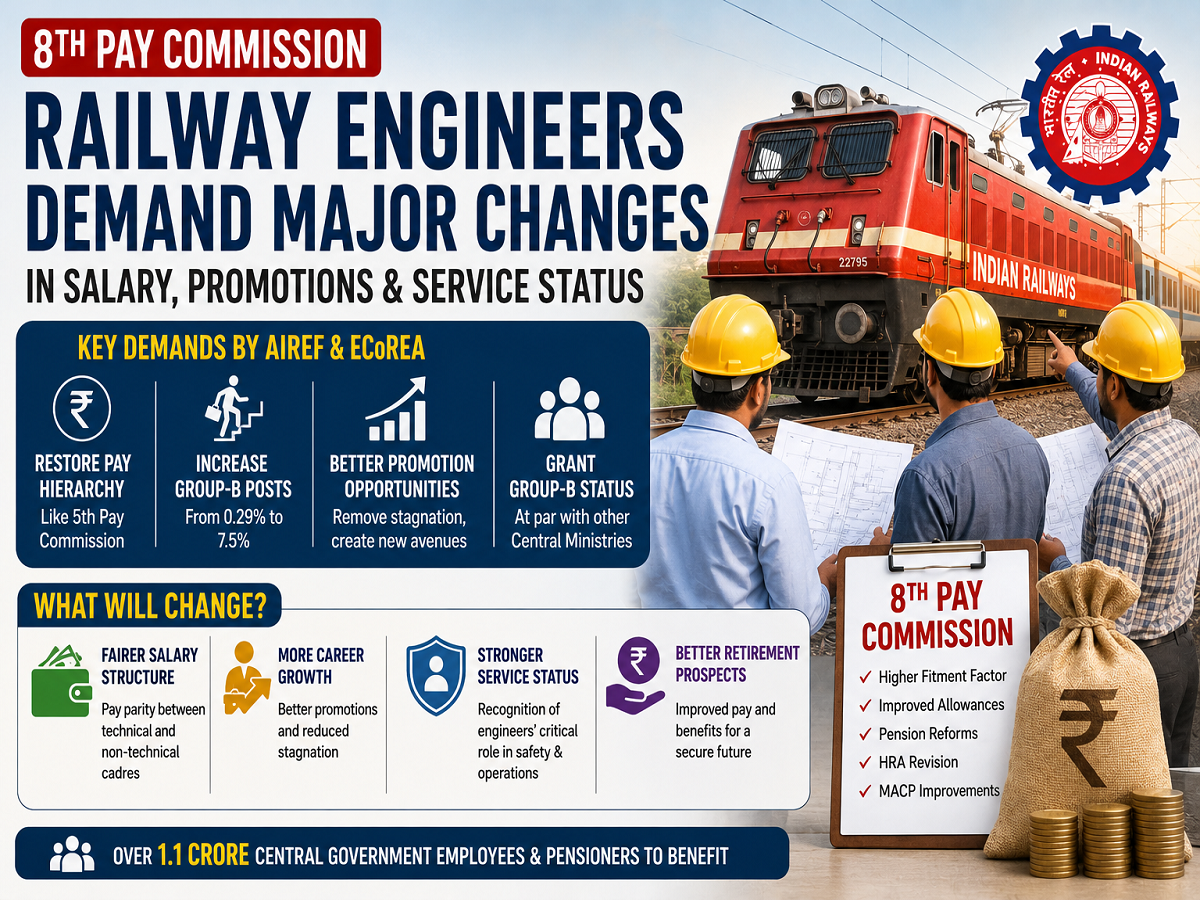
One of the primary demands raised by AIREF relates to the existing salary structure for railway engineers.
According to the federation, the current pay hierarchy does not adequately reflect the technical expertise, safety responsibilities, and operational duties handled by railway engineers. The organisation has urged the commission to restore the salary hierarchy that existed until the 5th Central Pay Commission, arguing that subsequent revisions gradually reduced pay parity for engineering personnel.
Employee representatives believe revisiting the earlier structure would help address long-standing wage disparities within the railway workforce.
Demand for Better Pay Parity With Other Cadres
AIREF has also expressed concern over what it describes as a widening pay gap between technical and non-technical cadres.
According to the federation, many employees in non-technical and non-safety roles currently receive higher pay despite railway engineers carrying responsibilities directly linked to operational safety, infrastructure maintenance, and engineering services.
The association has requested that the 8th Pay Commission review the existing pay structure to ensure greater parity between technical and non-technical positions.
Proposal to Increase Group-B Representation
Another major issue highlighted during the consultation was the limited availability of Group-B posts within Indian Railways.
According to AIREF, Group-B positions currently account for only around 0.29% of the sanctioned workforce in the railway system.
The federation has proposed increasing this proportion to approximately 7.5%, bringing it closer to the level seen across other central government departments.
Employee representatives argue that expanding Group-B positions would create more opportunities for career advancement and improve employee motivation.
Railway Engineers Seek Group-B Status
The federation has further requested that railway engineers be granted Group-B status, similar to officers serving in several other ministries of the Central Government.
According to the employee organisations, granting this status would improve career progression, provide greater recognition for technical responsibilities, and create a more balanced organisational structure.
The demand has been presented as part of broader efforts to improve service conditions for engineering personnel across Indian Railways.
Promotion Opportunities Remain a Key Concern
Representatives also highlighted concerns over limited promotional opportunities available to railway engineers.
According to the employee associations, the current structure leaves many engineers facing long periods of career stagnation due to the limited number of higher-level positions.
The organisations have requested reforms that would open additional promotion channels, reduce stagnation, and encourage professional growth within the railway engineering cadre.
Summary of the Key Demands
The major proposals submitted by AIREF include:
| Issue | Present Situation | Demand Submitted |
|---|---|---|
| Salary Structure | Engineers reportedly face pay disparities compared to some non-technical cadres | Restore pay hierarchy similar to earlier pay commission structure |
| Group-B Posts | Around 0.29% representation | Increase to approximately 7.5% |
| Career Progression | Limited promotional opportunities | Expand promotion avenues and reduce stagnation |
| Service Status | Existing subordinate service structure | Grant Group-B status comparable to other central government departments |
Nationwide Consultation Process Continues
The Bhubaneswar meeting formed part of the 8th Pay Commission's ongoing consultations with employee organisations, pensioners, and other stakeholders across the country.
The commission has already conducted discussions in several cities, including Delhi, Lucknow, Hyderabad, Srinagar, and Ladakh, before continuing its consultation programme in other regions.
These interactions are intended to gather feedback from different government departments before recommendations are finalised.
Other Employee Organisations Have Also Submitted Demands
Railway engineers are not the only group seeking changes.
Various central government employee associations have also submitted proposals covering issues such as:
- Higher fitment factor
- Revision of allowances
- Pension reforms
- Changes in House Rent Allowance (HRA)
- Improvements to the Modified Assured Career Progression (MACP) scheme
The commission is expected to examine these representations before preparing its recommendations.
What Happens Next?
The consultation meetings do not result in immediate salary revisions. Instead, they provide an opportunity for employee organisations to present evidence, explain existing challenges, and recommend policy changes for consideration by the commission.
Constituted in November 2025, the 8th Pay Commission is expected to submit recommendations that could influence the salaries, pensions, and service conditions of more than 11 million serving and retired central government employees. The final recommendations will be considered by the Central Government before any changes are implemented.