Business
UPI Payments May Soon Attract Charges for Large Merchants as Government Reviews MDR Proposal
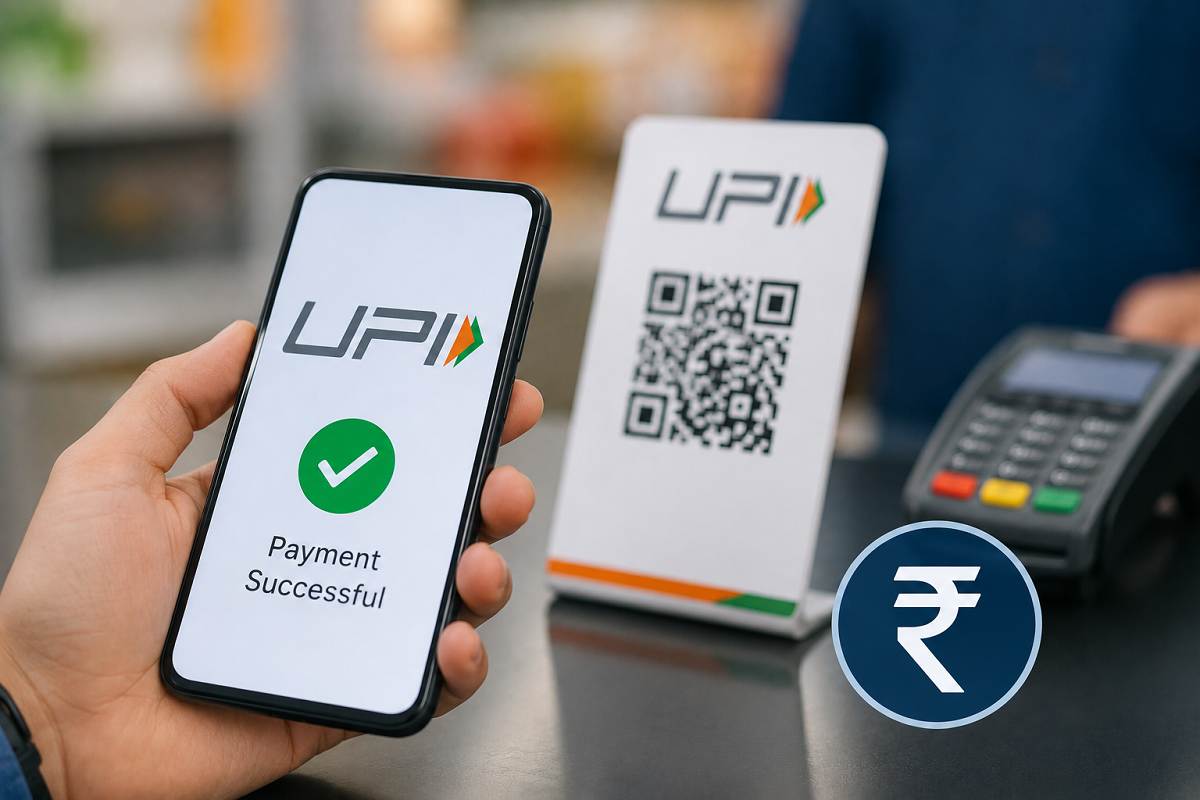
The Centre is reportedly considering bringing back Merchant Discount Rate (MDR) on select UPI transactions, but everyday users and small businesses may remain unaffected.
India's digital payment ecosystem could witness a significant policy change as the Central Government is reportedly examining a proposal to reintroduce the Merchant Discount Rate (MDR) on certain Unified Payments Interface (UPI) transactions. While no final decision has been announced, discussions suggest that the proposed fee would primarily target large businesses rather than individual consumers or small merchants.
The proposal comes at a time when UPI has become the country's preferred payment method, processing billions of transactions every month. If implemented, the move could reshape the economics of digital payments while attempting to balance industry sustainability with consumer convenience.
What Is Merchant Discount Rate (MDR)?
Merchant Discount Rate, commonly known as MDR, is a fee paid by merchants to banks or payment service providers whenever they accept digital payments. This charge helps cover the costs of payment processing, transaction settlement, network infrastructure and digital payment services.
In most digital payment systems, MDR is a standard industry practice. However, to accelerate digital payment adoption in India, the government removed MDR on UPI and RuPay debit card transactions in January 2020, allowing merchants to accept payments without paying this fee.
The decision played a major role in making UPI the country's most widely used digital payment platform.
What Is Being Proposed?
According to media reports, the government is evaluating a limited reintroduction of MDR rather than applying it universally.
The proposal under discussion reportedly includes:
- MDR may apply only to merchants with an annual turnover between ₹1 crore and ₹1.5 crore or higher.
- The fee could be limited to UPI transactions exceeding ₹2,000.
- The proposed MDR rate may range between 5 and 7 basis points.
At present, these suggestions remain under discussion, and the government has not officially approved or announced any policy change.
Why Is MDR Being Considered Again?
Banks, payment processors and digital payment companies have repeatedly raised concerns over the financial burden of handling a rapidly growing number of UPI transactions without earning transaction-based revenue.
Although the government currently provides financial support to compensate service providers for processing zero-MDR UPI transactions, industry stakeholders argue that the subsidy does not fully cover their operational expenses.
Maintaining payment infrastructure, ensuring cybersecurity, processing billions of transactions and investing in technology require substantial resources. As transaction volumes continue to grow, industry participants believe a limited MDR structure could help create a more sustainable digital payments ecosystem.
Will Consumers Have to Pay?
Based on the reports available so far, the proposed MDR is expected to be charged to eligible merchants rather than directly to customers making UPI payments.
Small shopkeepers and micro-businesses are also expected to remain outside the scope of the proposal if it is implemented in its current form.
However, experts note that businesses may eventually consider operational costs while pricing their products or services. Since no final framework has been released, the actual impact on consumers will become clear only after an official announcement.
UPI's Remarkable Growth in India
The discussion around MDR comes against the backdrop of UPI's extraordinary expansion over the past several years.
According to data released by the National Payments Corporation of India (NPCI), UPI transactions have grown from nearly 20 million transactions in FY 2016-17 to approximately 242 billion transactions during FY 2025-26.
During the same period, the total value of transactions surged from around ₹0.07 lakh crore to nearly ₹314 lakh crore, highlighting the platform's rapid adoption across businesses and consumers.
In June 2026 alone, UPI processed approximately 22.72 billion transactions, with a combined transaction value of around ₹28.92 lakh crore, reinforcing its position as India's leading digital payment network.
Final Decision Still Awaited
The proposal to reintroduce MDR remains at the discussion stage, and no official notification has been issued by the government. Any future policy is expected to strike a balance between encouraging digital payments and ensuring that banks and payment service providers can sustainably operate the country's rapidly expanding payment infrastructure.
Until an official decision is announced, UPI users can continue making transactions under the existing zero-MDR framework. Businesses, payment companies and consumers will now be watching closely to see how the government shapes the next phase of India's digital payment ecosystem.