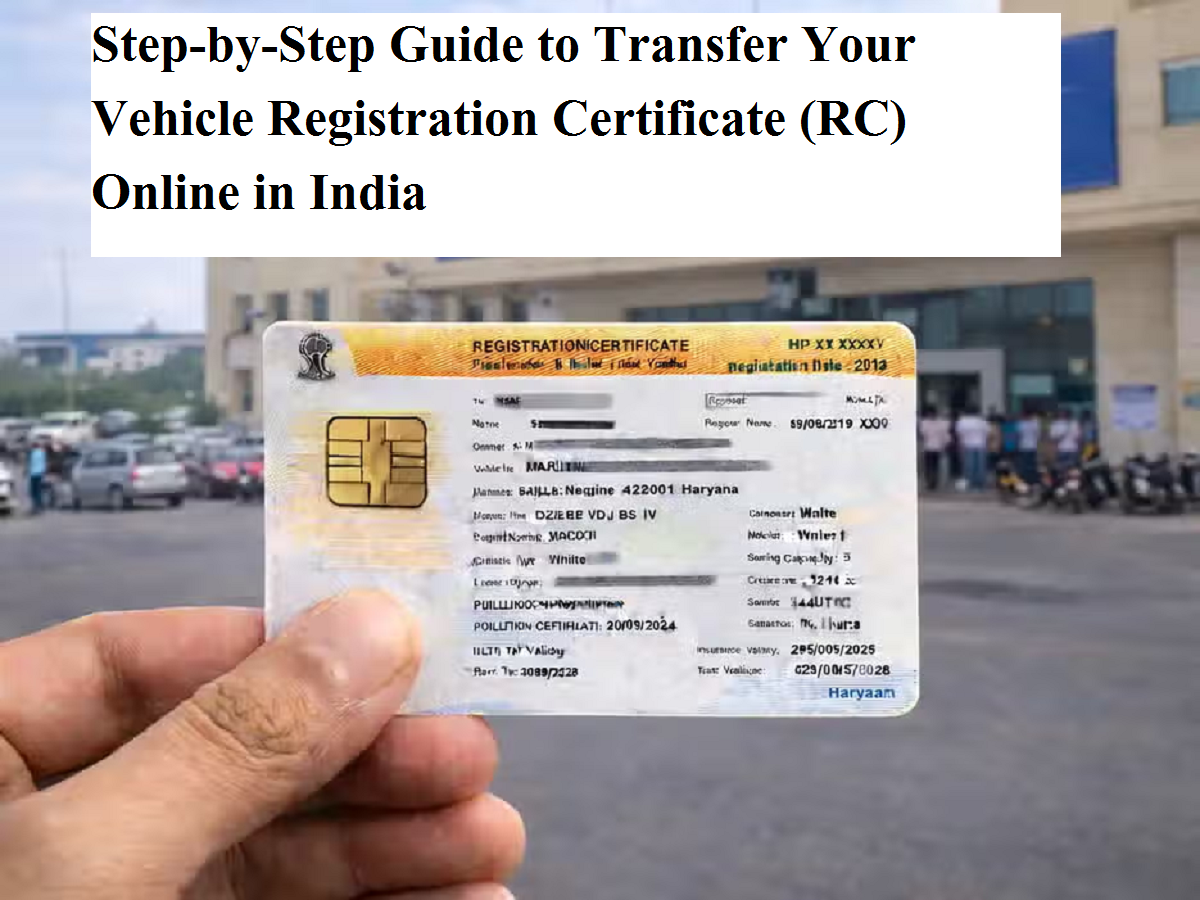
Owning a vehicle in India comes with important legal responsibilities, and one of the most essential documents is the Registration Certificate (RC). The RC serves as official proof that your vehicle is registered with the Regional Transport Office (RTO) and is authorized to run on Indian roads. Whenever a vehicle changes ownership—whether through sale, inheritance, auction, or relocation—the RC must be transferred to the new owner’s name.
Thanks to the government’s digital initiatives, vehicle owners can now complete the RC transfer process online through the Parivahan portal. This online service makes the procedure simpler, faster, and more transparent compared to visiting RTO offices multiple times.
Why RC Transfer Is Important
Transferring the RC is mandatory when a vehicle is sold or ownership changes. It ensures that:
- Legal responsibility shifts to the new owner
- Traffic violations are recorded correctly
- Insurance and tax records remain updated
- Fraud and misuse of vehicles are prevented
- Government databases stay accurate
Failure to transfer ownership can result in legal complications and penalties for both buyer and seller.
Types of Vehicle Ownership Transfer
Vehicle ownership can be transferred under different circumstances:
- Normal Sale Transaction – When a vehicle is sold directly from one person to another.
- Transfer After Owner’s Death – Ownership moves to a legal heir or nominee.
- Public Auction Purchase – Vehicles bought through government or authorized auctions.
Each category requires specific forms and supporting documents.
Documents Required for Online RC Transfer
To ensure smooth processing, the following documents must be prepared in advance:
- Transfer Forms (Form 29 and Form 30 for normal sale)
- Original Registration Certificate (RC)
- Valid motor insurance certificate
- Pollution Under Control (PUC) certificate
- PAN card of buyer and seller or Form 60
- Chassis and engine number imprint
- Proof of buyer’s date of birth
- Residential address proof
- Buyer’s declaration or undertaking
- Passport-size photographs
- Tax clearance certificate
- No Objection Certificate (NOC) from the RTO
- Additional forms for special cases such as inheritance or auction
How to Transfer Vehicle RC Online: Step-by-Step Process
Follow these steps to apply for RC transfer online:
Step 1: Visit the Official Portal
Go to the Parivahan e-services website and open the section for vehicle-related services.
Step 2: Select Your State
Choose the state where your vehicle is currently registered.
Step 3: Login or Register
Create an account or sign in using your mobile number and OTP.
Step 4: Enter Vehicle Details
Input your vehicle’s registration number and select your corresponding RTO.
Step 5: Choose Ownership Transfer Option
From the application menu, click on “Apply for Transfer of Ownership.”
Step 6: Fill Required Information
Enter chassis number, buyer details, seller details, and address information.
Step 7: Verify Vehicle Data
Your vehicle’s details will appear on the screen. Carefully verify all information.
Step 8: Pay Applicable Fees
Pay the required processing fee online, which usually ranges between ₹300 and ₹500.
Step 9: Submit Application
Confirm all details and submit the form.
Step 10: Physical Document Submission
Both buyer and seller must sign the required forms and submit documents to the concerned RTO for verification.
Processing Time and Verification
If all documents are accurate, the RC transfer generally takes 3 to 4 weeks to complete. In case of discrepancies, the RTO may request personal verification from both parties before approving the transfer.
Benefits of Online RC Transfer
- Saves time and reduces paperwork
- Transparent digital tracking
- Easy fee payment
- Eliminates long queues at RTO offices
- Faster processing
Transferring your vehicle’s RC online is a crucial legal step whenever ownership changes. The Parivahan portal simplifies the process by offering a user-friendly digital system that minimizes manual effort and delays. By preparing the necessary documents in advance and following the online steps carefully, vehicle owners can ensure a smooth and hassle-free RC transfer.
This digital approach not only saves time but also strengthens transparency and accountability in India’s transport system.